
Stainless Steel Chainmail for Cutting-Edge Protection
When it comes to purchasing chainmail for either industrial use or display, the decision can often feel overwhelming. Whether you’re buying for personal protection in a workplace, ensuring safety while handling food, or searching for a durable cosplay accessory, one of the most common struggles is knowing what constitutes high-quality chainmail. With so many options on the market, how do you avoid low-quality, unsafe, or fragile products? And how can you tell if a piece of chainmail is truly built to last?
As someone who’s been on both sides of this decision-making processwhether buying chainmail for a client, a personal collection, or an industrial purposeI’ve learned the hard way that not all chainmail is created equal. From incorrect material choices to weak welds, to inconsistent weave patterns, the difference between high-quality and low-quality chainmail can have a significant impact on performance and safety.
In this post, I’ll walk you through how to evaluate chainmail quality so you can make a truly informed choice and avoid the pitfalls of inferior products. Let’s dive into some practical tips and easy-to-follow steps that can save you time, money, and headaches.
Understanding the Pain Points in Chainmail Selection
Pain Point 1: Difficulty Telling Welded Rings from Open Rings
One of the most common challenges buyers face is distinguishing between welded and open rings. A lot of low-quality chainmail on the market may look decent at first glance but can be easily compromised due to poor ring closures. Open rings are simply loops that haven’t been welded or secured in any way, meaning they’re more prone to coming undone. This can lead to a chainmail suit or accessory falling apart quickly, compromising both its durability and protective qualities.
Pain Point 2: Uncertainty About Stainless Steel Grades
Not all stainless steel is created equally. You might come across chainmail made from a variety of materials, but when it comes to durability and corrosion resistance, the two primary types of stainless steel used in high-quality chainmail are 304 and 316. So how do you know which is best for your needs?
304 stainless steel is more affordable and offers good protection for general use, but it’s prone to corrosion, especially in moist environments or when exposed to food oils. On the other hand, 316 stainless steel is much more resistant to rust and corrosion, which is crucial for high-performance or food-processing applications. However, it does come at a higher price point.
Pain Point 3: Weak or Inconsistent Weaves
Even if the material is top-notch, a chainmail’s weave pattern can make or break its durability. Weave patterns, such as European 4-in-1, are widely considered the standard for strength and stability. If the weave pattern is inconsistent or poorly executed, the chainmail won’t be as effective at preventing cuts or tears. This is especially problematic when you’re using chainmail for industrial purposes or cut-resistant protection.
The Solution: How to Inspect Chainmail for Quality
Now that we’ve covered some common pain points, let’s look at the steps you can take to ensure that you’re purchasing high-quality chainmail that meets your expectations. Here’s how you can inspect chainmail and assess whether it’s suitable for your needs:
1. Inspect the Material: 304 vs 316 Stainless Steel
When looking at a piece of chainmail, always ask about the material used. 304 stainless steel is common for general-purpose chainmail but doesn’t hold up well in high-corrosion environments. If you’re purchasing for use in food processing, industrial environments, or for historical accuracy (where durability is key), 316 stainless steel is your best option due to its superior corrosion resistance.
Tip: Check the product description or ask the seller to confirm the grade of stainless steel used. If it’s not specified, don’t hesitate to request more information before committing to a purchase.
2. Evaluate the Welds: Are the Rings Welded or Open?
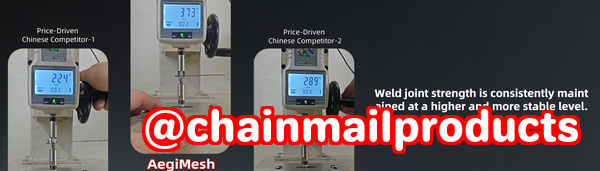
As I mentioned earlier, welded rings are crucial for the strength and longevity of chainmail. To test whether the rings are welded or not, you can perform a simple tug test. Gently pull on the links; if the rings don’t come apart and feel secure, chances are the rings are welded. If they break or come undone, you’re looking at open ringsdefinitely not a good sign.
Tip: When inspecting chainmail for food handling, industrial applications, or protection gear, be extra diligent about this. A failure in the welds could compromise safety, particularly in environments where cuts and abrasions are a concern.
3. Check the Ring Thickness and Inner Diameter
The thickness of the wire and the inner diameter of the rings are key indicators of chainmail strength. Thicker wire generally leads to stronger, more durable chainmail, but it can also affect flexibility. For some uses (like cosplay or historical reenactments), a thinner wire might be acceptable, but for industrial use, you’ll want to ensure that the wire is robust enough to withstand frequent handling.
Tip: Make sure to check the inner diameter of the rings as well. Too large, and the weave will be loose and weak; too small, and the chainmail can be uncomfortable and restrictive. Aim for a balance that ensures durability without compromising comfort.
4. Inspect the Weave Pattern: European 4-in-1
The most common weave pattern used in high-quality chainmail is European 4-in-1. This pattern involves weaving four rings through each central ring, creating a tight, interlocking structure that resists cuts and abrasions better than simpler weave styles.
Tip: Visually inspect the chainmail to see if the pattern is consistent and evenly applied. If the weave looks irregular, it’s a sign of poor craftsmanship.
Why Proper Chainmail Inspection Matters
When purchasing chainmail, it’s important to understand that you’re not just buying a decorative item or piece of armor; you’re investing in protection, safety, and durability. Here’s why it’s essential to inspect every piece before making a purchase:
-
Avoiding Unsafe Chainmail for Industrial or Food Processing Use: If the chainmail isn’t constructed properly, it may not offer the level of protection needed in a professional setting, which could lead to costly injuries or equipment damage.
-
Ensuring Durability for Cosplay or Display: You want your investment to last. Whether you’re buying for cosplay or historical purposes, ensuring that your chainmail is of high quality will save you the hassle and expense of needing replacements or repairs.
-
Saving Money by Avoiding Low-Quality Products: While cheaper chainmail might seem tempting, it’s usually not built to last. Spending a little more on quality means fewer replacements down the road, making it a smarter long-term investment.
Conclusion: How to Choose the Best Chainmail
Choosing the best chainmail isn’t as difficult as it seems once you know what to look for. Start by checking the material type (304 vs 316 stainless steel), inspect the welds to make sure they’re secure, evaluate the ring thickness and diameter, and ensure the weave pattern is tight and even. By following these inspection steps, you can be confident that you’re purchasing high-quality, durable chainmail that meets safety and durability standards for whatever purpose you need it for.
I highly recommend following these steps to ensure any chainmail purchase meets your specific needs. Don’t rush the processafter all, chainmail is an investment in both protection and style.
Ready to dive deeper? Check out our detailed chainmail inspection guide today at Aegimesh Chainmail, and learn more about how to identify high-quality chainmail for your needs.
FAQ
How can I tell if a chainmail ring is welded or open?
Look for securely closed rings that do not come apart when gently tugged. Open rings may come undone easily and are not durable.
Which stainless steel grade is best for long-lasting chainmail?
For general use, 304 stainless steel is suitable. For enhanced durability, especially in corrosive environments like food processing, opt for 316 stainless steel.
How do I inspect the weave pattern for strength?
Look for a consistent and tight weave, such as the European 4-in-1 pattern, which offers optimal strength and durability.
What are the signs of low-quality or unsafe chainmail?
Weak welds, open rings, uneven wire thickness, and irregular weave patterns all point to low-quality chainmail that won’t provide the durability or safety you need.
Can decorative chainmail be used for protective purposes?
While decorative chainmail can look great, it may not offer the same protection as properly made industrial or food-safe chainmail, which is built for durability.
How do I choose the right chainmail for industrial vs cosplay use?
For industrial use, look for durable materials like 316 stainless steel, strong welds, and a tight weave. For cosplay, a lighter material like 304 stainless steel with a visually appealing pattern may be sufficient.
Tags/Keywords:
chainmail quality, welded rings, stainless steel chainmail, cut-resistant chainmail, chainmail inspection, European 4-in-1 weave