
How to Choose the Right Cut-Resistant Stainless Steel Chainmail for Your Industry
When it comes to purchasing chainmail, especially for safety or professional use, making the right choice can be a daunting task. Whether you’re looking for chainmail to protect yourself from industrial-grade cuts, searching for a decorative piece for cosplay, or in need of a durable option for food handling, it’s easy to get overwhelmed by the choices available. I’ve been in the same position beforestaring at rows of chainmail products, unsure of how to tell which ones are truly high-quality and which are more style than substance. If you’re in the same boat, you’re not alone.
The good news is that identifying quality chainmail doesn’t have to be difficult. With the right guidance, anyone can inspect and evaluate chainmail to ensure they’re getting a safe, durable product that will meet their needs. In this post, I’ll walk you through how to identify high-quality stainless steel chainmail for any industrywhether you’re in manufacturing, cosplay, food processing, or simply collecting historical replicas.
Key Pain Points When Choosing Chainmail
Before diving into the inspection process, let’s explore some of the common challenges buyers face when selecting chainmail.
-
Welded vs. Open Rings
One of the most important aspects of chainmail is the type of rings used. Open rings are often weaker and may not provide the protection you need, especially in industrial or food processing environments. Yet, many low-quality chainmail products use open rings disguised as high-grade welded rings.
-
Choosing the Right Stainless Steel Grade
Not all stainless steel is created equal. The grade of steel can drastically impact the durability, corrosion resistance, and overall quality of the chainmail. While 304 stainless steel is the most common, 316 stainless steel is a better option for environments where corrosion is a concern. But how can you tell which one is used?
-
Inconsistent Weaves and Weak Durability
The weave pattern is another essential factor. Chainmail comes in different weaves, like the popular European 4-in-1 weave. A poor or inconsistent weave pattern can significantly reduce the chainmail’s durability and protective capabilities.
These pain points are all too common, but with the right knowledge, you can easily distinguish high-quality chainmail from the rest. Let’s dive into some practical ways to inspect chainmail and avoid costly mistakes.
How to Inspect Chainmail Quality: A Step-by-Step Guide
I’ve spent years researching and testing chainmail products, and here’s what I’ve learned: the best way to determine if you’re getting quality chainmail is to inspect it yourself. It’s not as complicated as it sounds, and by following these steps, you’ll be able to assess the quality of any chainmail product.
1. Check the Material: 304 vs. 316 Stainless Steel
The material of your chainmail is the foundation of its strength. As I mentioned earlier, two of the most common stainless steel grades used in chainmail are 304 and 316. Here’s how they compare:
-
304 Stainless Steel: This is the most common type of stainless steel used in chainmail. It’s affordable and offers good corrosion resistance, making it suitable for most applications, including cosplay and some industrial uses. However, it’s not ideal for high-corrosion environments like food processing or marine industries.
-
316 Stainless Steel: Known for its superior corrosion resistance, 316 is a must-have if you’re using chainmail in food processing, marine environments, or any situation where exposure to moisture or chemicals is frequent. While it’s more expensive than 304, it’s well worth the investment for durability and long-term performance.
2. Inspect the Rings: Welded vs. Open
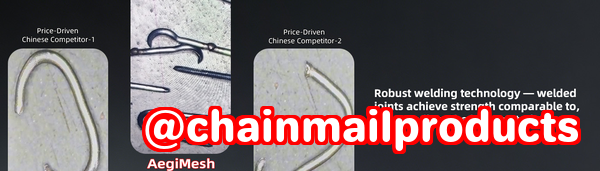
Welded rings are much stronger than open rings, and they provide better protection against cuts and damage. When inspecting a piece of chainmail, look closely at the rings. You can do this by gently pulling or squeezing them.
-
Welded Rings: When you look at the ends of a welded ring, you should see a small weld mark where the ends have been fused together. If the rings are welded properly, they should be nearly seamless and smooth.
-
Open Rings: These rings are not fused together and may show signs of weakness, especially if they’re loosely connected or show visible gaps. In some cases, they may also weaken over time with repeated use or exposure to stress.
3. Inspect the Weave Pattern: European 4-in-1
The weave pattern affects both the appearance and strength of the chainmail. The European 4-in-1 weave is one of the strongest and most widely used patterns, consisting of four rings woven through one central ring. It creates a flexible, durable, and protective material ideal for industrial use.
When inspecting the weave, check for:
-
Consistency: The pattern should be uniform and tight, without any loose or stretched rings.
-
Strength: Run your fingers along the weave and gently tug on individual rings. The weave should be tight, and the rings shouldn’t shift or separate under pressure.
4. Evaluate the Ring Diameter and Wire Thickness
Both the wire thickness and the diameter of the rings will affect the chainmail’s flexibility and overall strength. The general rule of thumb is that thicker wire and smaller ring diameters will provide greater protection. Here’s how to check:
-
Wire Thickness: Thicker wire will resist cuts better and last longer. You can feel the thickness by gently pressing a piece of chainmail between your fingers. High-quality chainmail will feel sturdy, not flimsy.
-
Ring Diameter: The smaller the ring diameter, the more rings there will be per square inch, creating a denser and more protective weave. However, smaller rings can also make the chainmail stiffer and less flexible.
5. Perform a Pull Test
If you’re unsure about the quality of the chainmail, perform a simple pull test. Grab a small section of the chainmail and pull it gently in opposite directions. High-quality chainmail should not break, stretch excessively, or show signs of wear.
6. Look for Signs of Corrosion
Corrosion is a major concern, especially with chainmail used in wet or corrosive environments. Look for any visible signs of rust or discoloration, particularly around the rings. If you spot any corrosion, it’s a sign that the chainmail may not be made from high-quality stainless steel or it hasn’t been properly treated.
Why Proper Chainmail Inspection Matters
As you can see, inspecting chainmail properly isn’t just about ensuring it looks good; it’s about protecting yourself, your business, or your hobby. Here are a few reasons why taking the time to inspect your chainmail is crucial:
-
Safety: Low-quality chainmail can compromise safety in industrial, food processing, or protective environments. A weak ring or inconsistent weave could lead to injury or exposure to hazards.
-
Durability: High-quality chainmail is built to last, whether you’re using it for cosplay, historical reenactments, or industrial applications. It will withstand wear and tear, saving you money in the long run.
-
Cost Savings: By identifying low-quality chainmail before you buy, you can avoid wasting money on products that won’t perform as expected.
Conclusion: Make Informed Decisions
I highly recommend following these inspection steps to ensure your chainmail purchase meets safety and durability standards. Whether you’re using it for industrial purposes, cosplay, or collecting historical replicas, taking the time to evaluate quality will ensure you make an informed choice.
Want to learn more about identifying high-quality chainmail products? Check out our detailed chainmail inspection guide today!
FAQ
1. How can I tell if a chainmail ring is welded or open?
Look at the ends of the rings. Welded rings will have a small, smooth weld mark, while open rings will show a gap where the ends are not fused.
2. Which stainless steel grade is best for long-lasting chainmail?
If you’re looking for durability and corrosion resistance, 316 stainless steel is the best choice, especially for food processing or marine use.
3. How do I inspect the weave pattern for strength?
Check for consistency in the pattern, ensuring the rings are tightly woven without gaps. You can also tug gently on the rings to see if they shift or separate.
4. What are the signs of low-quality or unsafe chainmail?
Look for signs of weak rings (open rings instead of welded), poor welding, inconsistent weave patterns, or visible corrosion.
5. Can decorative chainmail be used for protective purposes?
Decorative chainmail may not be suitable for protection. Always check the material, ring type, and weave pattern to ensure it meets safety standards.
6. How do I choose the right chainmail for industrial vs. cosplay use?
For industrial use, focus on durability, corrosion resistance, and proper ring welding. For cosplay, aesthetic appeal and comfort may be more important, but quality should still be a priority.
7. How can I ensure my chainmail lasts longer?
Regularly inspect your chainmail for signs of wear, keep it dry, and clean it according to the manufacturer’s instructions to extend its lifespan.