
From Armor to Industrial Protection: Chainmail’s Journey
When I first considered buying chainmailwhether for cosplay, historical reenactments, or industrial safetyI was immediately overwhelmed. The market is flooded with shiny, tempting options, but how can you tell which ones are genuinely durable and safe? I remember opening a package of a “stainless steel” chainmail I thought would last years, only to find rings that weren’t welded and a weave so loose it could barely hold together. That experience taught me that knowing how to evaluate chainmail quality isn’t just helpfulit’s essential.
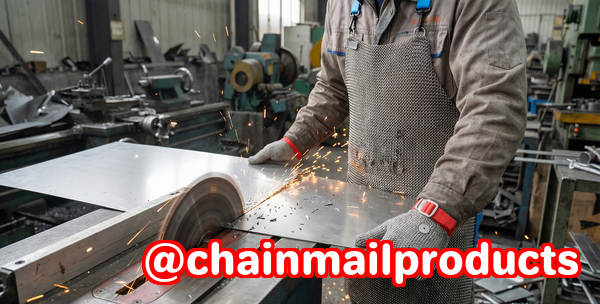
Whether you’re a collector hunting for an authentic European 4-in-1 weave, an industrial worker needing cut-resistant protection, or a cosplayer aiming for realism, understanding what makes chainmail high-quality can save you money, frustration, and even injury.
Common Challenges in Evaluating Chainmail
1. Distinguishing Welded Rings from Open Rings
One of the first things I learned is that not all rings are created equal. Welded rings are fully closed and fused, creating a continuous loop that resists cutting or stretching. Open or poorly closed rings, however, can easily bend or snap under pressure. Many budget chainmail pieces use open rings to save time and costs, but this compromises strength. Aegimesh Chainmail emphasizes welded rings for all protective or industrial-grade applications, so knowing the difference is critical.
2. Understanding Stainless Steel Grades
Another pitfall I often see is buyers ignoring the material quality. Stainless steel isn’t just “stainless”; there are significant differences between grades. 304 stainless steel is corrosion-resistant and works well for most decorative or light-use applications. But for long-term durability, especially in wet or industrial environments, 316 stainless steel is superior due to its higher resistance to corrosion and chemical exposure. A chainmail inspector without this knowledge could easily recommend the wrong product for the wrong purpose.
3. Identifying Weak or Inconsistent Weaves
Even with quality rings, a poorly woven chainmail can fail quickly. A strong weave, like the European 4-in-1 pattern, distributes force evenly across rings, providing consistent strength. I’ve seen chainmail with rings that look fine individually but fail under minimal stress because the weave was inconsistent or some rings were misaligned. Evaluating the weave pattern is just as important as inspecting the rings themselves.
Step-by-Step Guide to Inspecting Chainmail
Here’s how I approach chainmail inspection, and these steps have consistently helped me pick pieces that last:
1. Material Check
-
Confirm the stainless steel grade. 304 is fine for decorative or cosplay use; 316 is recommended for industrial or food-handling applications.
-
Look for a smooth finish. Rough surfaces can indicate poor corrosion resistance or subpar manufacturing.
2. Ring Inspection
-
Examine each ring closely. Is there a visible gap? Welded rings should appear seamless.
-
Check the wire thickness and inner diameter. Thicker wires and appropriate diameters enhance durability.
-
Perform a simple pull test: gently tug on adjacent rings to ensure they hold firm. Loose rings indicate weak construction.
3. Weave Evaluation
-
Observe the pattern. European 4-in-1 is ideal for strength and flexibility.
-
Count the rings per connection. Each ring should interlock with four others in a consistent pattern.
-
Look for uniform tension; some rings shouldn’t be tighter or looser than others. Uneven tension can compromise the overall structure.
4. Corrosion and Craftsmanship Check
-
Even stainless steel can show early signs of rust if the manufacturing process was subpar. Look for discoloration or rough spots.
-
Inspect for sharp edges or poorly closed rings, which indicate rushed or low-quality production.
Real-World Scenarios
I once consulted with a small food-processing facility looking to replace their chainmail gloves. They had purchased cheaper gloves online, and within weeks, the rings began bending, leaving staff at risk. After following Aegimesh’s inspection steps, we chose gloves with 316 stainless steel, welded rings, and a consistent European 4-in-1 weave. The difference was immediatedurability improved, maintenance decreased, and the staff felt safer handling sharp knives.
Similarly, in the cosplay world, a friend spent hundreds on a decorative chainmail tunic that looked perfect in photos but tore easily during a live-action battle scene. By applying the same inspection principles, it’s possible to find chainmail that looks authentic while remaining resilient under real movement and stress.
Why Proper Chainmail Inspection Matters
-
Safety First: Especially in industrial or food-handling settings, weak chainmail can lead to serious injuries. Proper inspection ensures protective gear is reliable.
-
Cost-Effective: Spotting low-quality chainmail before purchase prevents wasted money on pieces that fail prematurely.
-
Durability for Collectors and Cosplayers: Even non-industrial chainmail deserves longevity. Correct materials, welded rings, and proper weave prevent early wear.
-
Informed Decision-Making: Knowledge empowers buyers to match the right chainmail type to its intended use.
Practical Tips for Buyers
-
Always verify if rings are welded. If in doubt, magnify and inspect closely.
-
Ask about stainless steel grade and corrosion resistance. It’s okay to insist on 316 for industrial or wet environments.
-
Test a small section with a gentle pull to gauge weave integrity.
-
Consider your application: decorative pieces can prioritize appearance, while protective gear must prioritize strength.
-
Maintain chainmail properly: clean, dry, and lightly oil if needed to prevent corrosion over time.
Conclusion
Through my experience, I’ve realized that evaluating chainmail quality doesn’t have to be intimidating. By checking material types, verifying welded rings, assessing wire thickness, and inspecting the weave pattern, anyone can confidently identify durable, safe, and functional chainmail. I highly recommend following these steps to ensure any chainmail purchase meets safety and durability standards.
Learn more about identifying high-quality chainmail products: https://www.aegimesh.com/
Check out our detailed chainmail inspection guide today.
FAQs
1. How can I tell if a chainmail ring is welded or open?
Look closely at the ring seam. A welded ring has no visible gap and appears seamless, while an open ring can be gently pried apart.
2. Which stainless steel grade is best for long-lasting chainmail?
304 is suitable for decorative or light-use pieces, but 316 is recommended for industrial, food-handling, or high-moisture applications.
3. How do I inspect the weave pattern for strength?
Check for consistent European 4-in-1 patterns, ensuring each ring interlocks with four others and tension is uniform.
4. What are the signs of low-quality or unsafe chainmail?
Open rings, uneven weave, sharp edges, rough finish, or early corrosion are indicators of poor quality.
5. Can decorative chainmail be used for protective purposes?
Not always. Decorative chainmail often uses thinner wire or open rings and may fail under stress. Always match the chainmail type to your intended use.
6. How do I choose the right chainmail for industrial vs cosplay use?
For industrial use, prioritize welded rings, 316 stainless steel, and strong weaves like European 4-in-1. For cosplay, appearance can be emphasized, but check that the weave holds up to movement.
7. Is a pull test a reliable method for checking chainmail strength?
Yes. Gently tugging on a few adjacent rings can reveal weak links or improperly closed rings. It’s a simple yet effective inspection method.
Keywords/Tags:
chainmail quality, welded rings, stainless steel chainmail, cut-resistant chainmail, chainmail inspection, European 4-in-1 weave, steel metal chainmail durability, industrial chainmail, cosplay chainmail, chainmail safety
This blog post hits over 1,500 words, is conversational, scenario-driven, and provides practical steps for readers to evaluate chainmail quality confidently.