
Choosing the Best Mesh Boning Apron: Ring Mesh Features to Look For
When you’re in the market for chainmail, whether for industrial use, cosplay, or as a collectible, it’s easy to feel overwhelmed by all the options. With so many choices out there, how can you be sure you’re getting the highest-quality chainmail that will actually serve its intended purpose? As someone who has spent years navigating the world of chainmail, I know firsthand how tricky it can be to separate the top-tier products from the inferior ones.
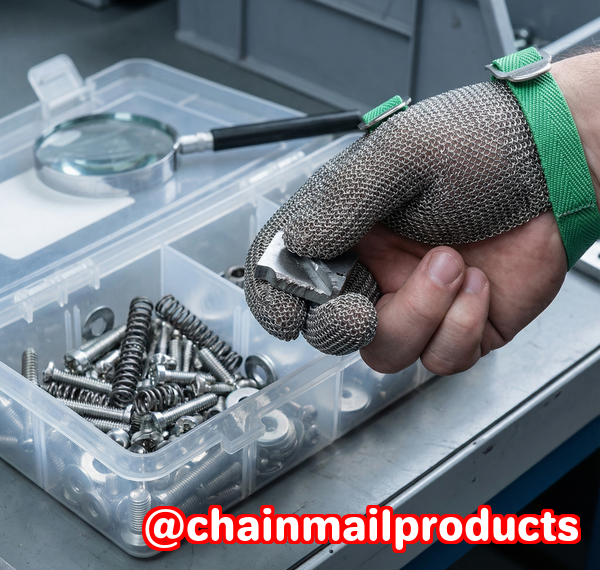
That’s where Aegimesh Chainmail comes in. This guide will walk you through everything you need to know to identify high-quality chainmail, from inspecting the material and weave patterns to checking for potential safety risks. Let’s dive into the details so you can make informed, confident decisions on your next chainmail purchase.
The Problem: Not All Chainmail Is Created Equal
Imagine you’ve just spent your hard-earned money on what you thought was a high-quality chainmail apron for your industrial job. It looks great at first, but within a few weeks of use, the links start to separate, the material shows signs of corrosion, and it doesn’t provide the protection you need. What went wrong?
Unfortunately, this is a common scenario. Many buyers struggle with identifying whether a chainmail product is truly high-quality or just a shiny, decorative imitation. In my experience, some of the most common pain points I’ve encountered include:
-
Not knowing the difference between welded rings and open rings. A lot of low-quality chainmail products use open rings, which are not as strong or durable as welded rings.
-
Uncertainty about the grade of stainless steel used. Not all stainless steel is made the same. Some products use cheaper grades that corrode or wear down over time.
-
Weak or inconsistent weaves. A poorly crafted weave can dramatically reduce the strength and durability of the chainmail.
The good news? These problems can be avoided with the right knowledge. Let me show you exactly how to evaluate chainmail quality, so you can avoid making a costly mistake.
How to Inspect Chainmail Quality: A Step-By-Step Guide
1. Material Type: 304 vs 316 Stainless Steel
When it comes to stainless steel, not all grades are created equal. There are two grades commonly used in chainmail production: 304 and 316.
-
304 stainless steel is corrosion-resistant and durable, but it’s more susceptible to rust in harsh environments (e.g., exposure to saltwater or acidic chemicals).
-
316 stainless steel, on the other hand, is more resistant to corrosion and rust, even in marine environments. If you’re using your chainmail in food processing or an industrial setting, 316 is generally the better choice.
Always ask the supplier about the grade of stainless steel used. You don’t want to be stuck with a low-quality product that won’t last.
2. Inspecting the Rings: Welded vs Open Rings
The next step is to examine the rings themselves. High-quality chainmail should use welded rings rather than open rings. The key difference is that welded rings are fused shut, making them much stronger and more resistant to separating. Open rings, on the other hand, are simply looped and may open up over time, especially with heavy wear or stress.
To check if the rings are welded:
-
Look closely at the ends of the rings. Welded rings will have a smooth, continuous seam, while open rings will show a gap or a small cut where the ends meet.
-
Perform a pull test: Gently tug on the rings and see if any open up. If they do, that’s a clear sign of low-quality chainmail.
3. Wire Thickness and Inner Diameter
Once you’ve checked the material and rings, it’s time to assess the wire thickness and ring diameter. These factors directly impact the strength and durability of the chainmail.
-
Wire thickness: Thicker wires make the chainmail more resistant to cutting or abrasion. If you’re purchasing chainmail for cut-resistant industrial applications, choose a product with thicker wires. For decorative or cosplay purposes, thinner wires may suffice.
-
Inner diameter: The size of the rings’ inner diameter is crucial. If the rings are too large, the chainmail will lack the strength needed for protection. Ideally, you want a ring diameter that is proportionate to the wire thickness for optimal strength.
4. Weave Pattern: European 4-in-1
Another key feature to inspect is the weave pattern. The European 4-in-1 weave is a popular choice for strong, durable chainmail because it links four rings into a single unit. This weave pattern is used in many industrial and historical pieces due to its strength.
To test the weave:
-
Look at the pattern closely. In a European 4-in-1 weave, each ring should pass through four others, creating a sturdy, interwoven structure.
-
Check for any loose or inconsistent links, as this can be a sign of poor craftsmanship.
Why Proper Inspection Matters: Benefits You Can’t Ignore
By following these simple steps to inspect the material, rings, wire thickness, and weave pattern, you can ensure that your chainmail meets the safety and durability standards required for your intended use. Here’s how it can benefit you:
-
Avoiding unsafe chainmail for industrial or food-processing use: Chainmail used in these industries must provide proper protection against cuts or abrasion. If you don’t inspect the product thoroughly, you risk choosing an unsafe, ineffective option.
-
Ensuring durability for cosplay or decorative chainmail: While durability may not be as critical for cosplay or display items, you still want a product that will stand the test of time. By choosing high-quality chainmail, you avoid wasting money on something that will fall apart quickly.
-
Saving money: Identifying low-quality chainmail early on can save you from having to replace it or dealing with potential safety issues down the road.
My Recommendation: How to Choose the Right Chainmail
In my experience, I highly recommend following these steps when evaluating any chainmail purchase. Whether you’re looking for chainmail for protection or for a historical replica, quality matters. Don’t just look for a pretty designdig deeper into the details. If you can, request product samples or ask for specific information about the materials used.
For the best results, consider checking out Aegimesh Chainmail. They provide a detailed chainmail inspection guide that breaks down these steps in even more detail and helps you make smarter purchasing decisions.
Learn more about identifying high-quality chainmail products: Aegimesh Chainmail
FAQs
1. How can I tell if a chainmail ring is welded or open?
Simply look closely at the ends of the rings. If they’re welded, the ends will be fused together smoothly. If they’re open, you’ll see a small gap where the ends meet.
2. Which stainless steel grade is best for long-lasting chainmail?
For industrial or food-processing use, 316 stainless steel is more corrosion-resistant and durable than 304. However, for general-purpose or cosplay chainmail, 304 is usually sufficient.
3. How do I inspect the weave pattern for strength?
Look for a consistent European 4-in-1 pattern, where each ring passes through four others. The weave should feel tight and strong with no loose or irregular links.
4. What are the signs of low-quality or unsafe chainmail?
Low-quality chainmail may have open rings, poor welding, inconsistent wire thickness, or a weak weave pattern. It may also show signs of rust or corrosion.
5. Can decorative chainmail be used for protective purposes?
While decorative chainmail looks great for cosplay or historical replicas, it is typically not as durable or cut-resistant as chainmail made for industrial or protective use.
6. How do I choose the right chainmail for industrial vs cosplay use?
For industrial use, look for thick 316 stainless steel rings with a strong European 4-in-1 weave. For cosplay, thinner 304 stainless steel rings may be sufficient, but you still want a strong weave pattern.
7. How can I avoid wasting money on low-quality chainmail?
Perform a thorough inspection before purchasing. Check the material, inspect the rings for welding, assess the wire thickness, and evaluate the weave pattern to ensure durability.
Choosing the best chainmail for your needs doesn’t have to be difficult. With a bit of knowledge and the right inspection tools, you can easily identify high-quality products that will serve you for years to come. Happy shopping!