
The Benefits of Stainless Steel Chainmail for Protective Work Gear
When it comes to protective gear, there’s one product that’s stood the test of time and still plays a crucial role in industrial settings, cosplay, and even historical reenactments: chainmail. But as a buyer, how do you know if the chainmail you’re about to purchase is genuinely high-quality, safe, and durable? Too often, low-quality chainmail products flood the market, and distinguishing between top-tier and inferior options can feel overwhelming. Whether you’re working in a hazardous industrial environment, participating in a cosplay event, or looking for a solid historical replica, it’s crucial to ensure that your chainmail not only meets safety standards but is also built to last.
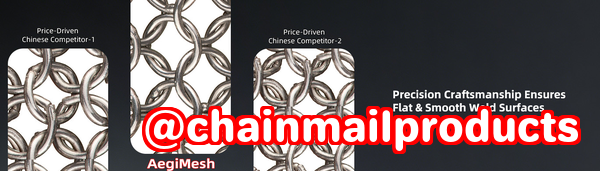
In this article, I’ll share some valuable insights on how to evaluate stainless steel chainmail for your protective work gear needs, focusing on real-world scenarios and practical tips to help you make an informed purchase. By the end, you’ll have the knowledge to identify high-quality products like Aegimesh Chainmail, which is trusted by both professionals and enthusiasts alike.
Understanding Chainmail: What Makes a Product High-Quality?
Before diving into how to evaluate chainmail, let’s talk about the basics of what makes a chainmail product stand out. Chainmail is essentially a mesh of interlinked rings that offer protection from sharp objects and impacts. The two main types of chainmail you’ll come across are made from either steel or aluminum, with stainless steel being the top choice for durability and strength.
But not all stainless steel chainmail is created equal. There are several factors that determine whether a product is of high quality, such as the type of material used, the quality of the rings, the weave pattern, and the overall construction. Let’s go over some of the most common pain points you may face when evaluating chainmail and how you can overcome them.
Common Pain Points in Evaluating Chainmail
-
Welded Rings vs. Open Rings: How to Tell the Difference?
One of the most confusing aspects of evaluating chainmail is distinguishing between welded and open rings. Open rings, which are simply rings that are not fused together, are cheaper to make but are also less durable. They’re more prone to separating under stress, making them unsuitable for protective gear.
On the other hand, welded rings are fused together to create a stronger, more secure mesh. If you’re looking for durable and protective chainmail, you’ll want to ensure that the rings are welded. To check this, you can simply look closely at the rings. If you see a small, smooth seam where the ends meet, it’s a welded ring. If the ends are separated, it’s an open ring.
-
Choosing the Right Stainless Steel Grade: 304 vs. 316
Another common issue is understanding which stainless steel grade is best for chainmail. Most stainless steel products come in two main grades: 304 and 316.
Grade 304 stainless steel is the most common and is generally resistant to rust and corrosion. However, if you’re going to be using your chainmail in harsher environmentslike exposure to saltwater or chemicalsgrade 316 stainless steel is the better option. It has a higher resistance to corrosion and is often used in marine environments and industrial applications.
-
Weak or Inconsistent Weaves: How to Spot Them
Weak or inconsistent weave patterns are another red flag when evaluating chainmail. A good weave pattern, such as the popular European 4-in-1 weave, ensures the rings are tightly interlinked to provide maximum strength and durability. If the weave is loose or inconsistent, it could compromise the protective quality of the chainmail.
To check the weave, run your fingers through the mesh and see if there are any areas where the rings seem out of place or easily shift. A quality European 4-in-1 weave should feel uniform and solid across the entire surface.
How to Inspect Stainless Steel Chainmail for Quality
Now that we’ve covered some of the common pain points, let’s break down some of the key inspection methods you can use to ensure you’re getting a high-quality chainmail product.
1. Check the Material Type (304 vs. 316 Stainless Steel)
First, check the material grade. Most high-quality chainmail, like Aegimesh, uses 304 or 316 stainless steel. If the chainmail is intended for food handling, medical, or industrial use, 316 stainless steel is recommended for its enhanced corrosion resistance.
2. Inspect Ring Welding and Wire Thickness
Once you confirm the material type, inspect the rings closely. As I mentioned earlier, welded rings are far superior to open rings for durability. You’ll also want to check the wire thickness. Thicker wires provide stronger protection and will hold up better over time.
3. Evaluate the Weave Pattern
The European 4-in-1 weave is a popular choice for protective chainmail because it offers a balance between flexibility and strength. Check for any loose or irregular rings in the weave pattern. This can usually be done by running your fingers along the surface of the chainmail.
4. Perform a Simple Pull Test
A simple way to test the durability of your chainmail is by performing a pull test. Grasp a section of the chainmail and pull gently to see if the rings hold together. If they shift or come apart, that’s a sign that the chainmail may not be durable enough for heavy-duty use.
5. Look for Signs of Corrosion or Poor Craftsmanship
Look for any signs of rust, pitting, or discoloration on the rings. Corrosion can weaken the chainmail, and poor craftsmanship can result in an uneven weave that doesn’t offer reliable protection. If you spot any of these issues, it’s best to pass on that product.
Benefits of Proper Chainmail Inspection
Properly inspecting your chainmail can save you a lot of money and frustration in the long run. By knowing what to look for, you’ll be able to avoid purchasing low-quality or unsafe chainmail, which can lead to:
-
Safety Hazards: Weak chainmail, especially in industrial settings, can fail to provide adequate protection against cuts, abrasions, or impacts.
-
Wasted Money: Low-quality chainmail might look appealing due to its price, but it’s often not durable or safe, meaning you’ll have to replace it sooner.
-
Missed Durability: You’ll also ensure that your chainmail will last for years, whether you’re using it for cosplay, historical reenactments, or industrial protection.
Conclusion: Ensuring Quality Chainmail for Safety and Durability
As you can see, inspecting chainmail isn’t just about looking at the price tagit’s about making sure you’re investing in a product that meets your needs and stands the test of time. I highly recommend following the steps outlined in this guide to ensure that any chainmail you purchase meets the highest safety and durability standards.
By checking the material grade, inspecting the rings, and evaluating the weave, you’ll be able to identify top-quality chainmail that’s right for your specific use case. If you’re in the market for high-quality chainmail, I encourage you to check out Aegimesh Chainmail, where you can find products designed for industrial cut protection, food handling, cosplay, and more.
Learn more about identifying high-quality chainmail products: Aegimesh Chainmail
Check out our detailed chainmail inspection guide today!
FAQ
1. How can I tell if a chainmail ring is welded or open?
Simply look for a small, smooth seam where the ends of the ring meetthis indicates that it’s welded. Open rings will have a visible gap where the ends don’t meet.
2. Which stainless steel grade is best for long-lasting chainmail?
Grade 316 stainless steel is the most corrosion-resistant and is ideal for industrial or marine environments. Grade 304 is also a good choice for general use.
3. How do I inspect the weave pattern for strength?
Run your fingers through the chainmail to check for any loose or misaligned rings. A strong European 4-in-1 weave should feel tight and uniform.
4. What are the signs of low-quality or unsafe chainmail?
Look for weak or inconsistent weaves, open rings, corrosion, and poor craftsmanship. These issues compromise the safety and durability of the chainmail.
5. Can decorative chainmail be used for protective purposes?
Not all decorative chainmail is suitable for protection. Ensure it’s made with welded rings and high-quality material if you need it for industrial or safety use.
6. How do I choose the right chainmail for industrial vs cosplay use?
For industrial use, look for chainmail made from 316 stainless steel with a strong, uniform weave pattern like European 4-in-1. For cosplay, you may prioritize comfort and aesthetics but should still check for basic durability and quality.
Tags or Keywords:
chainmail quality, welded rings, stainless steel chainmail, cut-resistant chainmail, chainmail inspection, European 4-in-1 weave