
Comparing the Historical Use of Chainmail and Ring Mesh in Combat
Learn how to identify high-quality chainmail products for safety, durability, and professional use, avoiding low-quality imitations and making informed purchases.
When History Meets Modern Protection: A Chainmail Buyer’s Dilemma
Have you ever found yourself staring at a piece of chainmail, unsure if it’s the real deal or just another decorative imitation? Whether you’re a buyer, a collector, or someone looking for practical protection, it’s tough to know what’s worth your investment. There’s a world of difference between high-quality chainmail designed for safety and durability and low-cost, low-quality versions made purely for looks.
As someone who has spent years handling chainmail for everything from cosplay to industrial safety, I’ve learned that evaluating chainmail quality can be a challenge. Many buyers, like you, often make the mistake of assuming all chainmail is created equalonly to discover the hard way that some products are barely worth the price they paid. This article aims to clear up the confusion, helping you make informed decisions when buying chainmail for any purpose, from historical reenactments to professional use.
The Pain of Getting It Wrong
When I first started using chainmail for various projects, I ran into the same issues many buyers face:
-
Welded Rings vs. Open Rings: Some manufacturers cut corners by using open rings, which compromise the overall strength of the chainmail. This is a critical concern for those using it in industrial or safety environments, where every link needs to be secure.
-
Corrosion and Material Problems: You might be familiar with stainless steel chainmail, but not all stainless steel is the same. Choosing the wrong grade can mean facing premature corrosion or reduced durability.
-
Inconsistent Weave Patterns: Many decorative chainmail pieces are made with weak or inconsistent weaves. These are fine for display but not suitable for real-world protection.
To make sure you don’t fall into these traps, I’ll walk you through how to inspect chainmail for quality, focusing on material types, ring types, and weave patterns.
How to Inspect Chainmail for Quality
I’ve spent years refining my method of inspecting chainmail, and I want to share some tips that will save you time, money, and potential headaches. By following a few simple steps, you’ll be able to differentiate high-quality chainmail from low-cost imitations, no matter what you’re using it forwhether it’s for cosplay, industrial cut protection, or historical replicas.
1. Check the Material Type: Stainless Steel Grades Matter
Not all stainless steel is created equal. Chainmail made from 304 stainless steel is commonly available and offers decent resistance to rust and corrosion. However, if you’re looking for the highest level of protection and durabilityespecially for industrial applicationsyou should be looking for 316 stainless steel. This grade is more resistant to corrosion, making it ideal for environments where moisture and chemicals are present.
Quick Tip: If the chainmail is going to be exposed to the elements or used in food processing, always ask about the material. The difference between 304 and 316 stainless steel can mean the difference between a long-lasting purchase and one that starts rusting within months.
2. Inspect the Ring Types: Welded vs. Open Rings
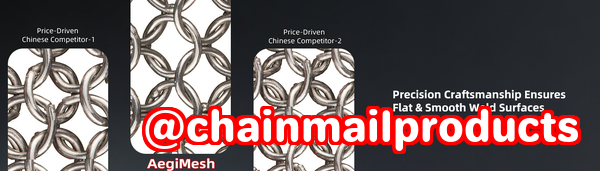
This is one of the easiest ways to tell whether a piece of chainmail is suitable for heavy-duty use or simply made for display. High-quality chainmail should use welded ringseach ring should be securely fused closed. If you find that the rings are open, then the chainmail is likely not meant for protective use.
Why it Matters: Open rings can easily come undone under stress, which can compromise the integrity of the chainmail. If you plan on using it for industrial cut protection or heavy-duty work, welded rings are a must.
3. Examine the Wire Thickness and Inner Diameter
Chainmail rings come in various thicknesses and diameters, which directly affect the strength and durability of the weave. The key here is balance. Too thin a wire, and the chainmail becomes too weak to offer proper protection. Too thick a wire, and the rings may become too stiff and uncomfortable.
Tip: If the chainmail is for wearability, make sure the wire thickness is appropriate for comfort and movement. For protective use, make sure the wire is strong enough to resist cutting forces.
4. Evaluate the Weave Pattern
Weave patterns play a big role in determining the strength of the chainmail. One of the most durable and historically accurate patterns is the European 4-in-1 weave. This weave, which interlocks four rings in each direction, provides a good balance between flexibility and strength.
Key Point: Look for evenness in the weave. A good-quality piece should have consistent rings, and the pattern should be uniform throughout. Inconsistent weaves or loose rings are signs of poor craftsmanship.
The Importance of Inspection: Why It Matters
Whether you’re buying chainmail for industrial safety, food processing, cosplay, or historical reenactments, it’s crucial to understand that quality matters. High-quality chainmail not only ensures durability and longevity but also helps keep you safe.
If you’re using chainmail in an industrial or food-processing setting, you’ll want to make sure that your purchase meets specific safety standards. A poorly made piece could leave you vulnerable to injuries or contamination.
Similarly, for collectors or cosplayers, poor-quality chainmail could result in a disappointing display piece or costume that won’t hold up over time. No one wants to spend money on something that looks impressive at first but falls apart quickly.
Practical Tips for Evaluating Chainmail Quality
Let’s break down some straightforward ways you can test chainmail before making your purchase:
-
The Pull Test: This simple test will help you check the strength of the rings. Grab a small section of the chainmail and give it a gentle but firm pull. High-quality chainmail should not have any loose rings or stretch under pressure.
-
Look for Corrosion: Stainless steel chainmail should not rust, but lower-grade products may corrode quickly. Check for any signs of rust or pitting, especially around the rings. If you see these signs, it’s a red flag.
-
Weave Consistency: Make sure that the weave is tight and uniform. Gaps or inconsistencies in the weave pattern are signs that the chainmail isn’t made to withstand much stress.
-
Check the Fit: If the chainmail is meant to be worn, check that the rings fit comfortably around the wearer’s body. You want to ensure it moves freely and doesn’t chafe or restrict movement.
Conclusion: The Best Chainmail for Every Use
I highly recommend following these steps to ensure that any chainmail purchase meets safety and durability standards. Whether you’re purchasing chainmail for industrial cut protection, food processing, cosplay, or as a collector’s item, it’s essential to inspect it carefully. Don’t be swayed by looks alonequality matters when it comes to chainmail.
If you’re still unsure about what to look for or need more guidance, our team at Aegimesh is here to help. You can check out our detailed chainmail inspection guide on our website.
Learn more about identifying high-quality chainmail products: Aegimesh Chainmail Guide
FAQ
-
How can I tell if a chainmail ring is welded or open?
To check if the rings are welded or open, simply examine the ends of the rings. Welded rings will have a smooth, continuous surface, while open rings will show a small gap.
-
Which stainless steel grade is best for long-lasting chainmail?
For long-lasting durability, especially in harsh environments, 316 stainless steel is ideal. It offers superior corrosion resistance compared to 304 stainless steel.
-
How do I inspect the weave pattern for strength?
Look for consistent, tight weaves. The European 4-in-1 weave is a reliable indicator of strength and durability. Avoid chainmail with loose or uneven rings.
-
What are the signs of low-quality or unsafe chainmail?
Signs of poor quality include open rings, rust or corrosion, loose rings in the weave, and inconsistent weave patterns. Always check for these red flags before purchasing.
-
Can decorative chainmail be used for protective purposes?
Decorative chainmail is usually not suitable for protection. It’s often made with thinner wire and less durable rings, making it less resistant to cuts or impacts.
-
How do I choose the right chainmail for industrial vs cosplay use?
For industrial use, focus on chainmail with welded rings and thicker wire. For cosplay, aesthetic value and comfort might be more important, so lighter materials and a more flexible weave can work.
Tags or Keywords:
chainmail quality, welded rings, stainless steel chainmail, cut-resistant chainmail, chainmail inspection, European 4-in-1 weave