
Why Weld Quality Matters in Chainmail Accessories
When you’re in the market for chainmailwhether it’s for a costume, an industrial application, or something in betweenyou might find yourself wondering how to tell if a piece is high-quality. I get it; when you’re buying something as unique as chainmail, it’s not always easy to figure out whether it will stand up to the test of time or if it’s just a decorative piece that might fall apart after a few uses.
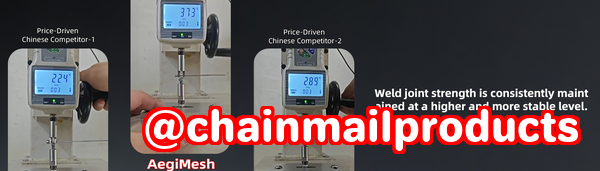
Let’s face it: chainmail products can be a significant investment, especially if you’re looking for something that will offer durability, strength, or protection. So how do you ensure that the chainmail you’re purchasing is built to last? The key is understanding weld quality and how to evaluate it. Poor welds can make chainmail weak and unsafe, while the right welds will give you a durable, long-lasting product that performs well in a range of settings.
In this post, I’ll walk you through the essentials of chainmail inspection, from welded rings to the right weave pattern, and explain how these factors contribute to the overall quality and safety of the product.
Common Pitfalls When Evaluating Chainmail
For many buyers, determining whether a chainmail product is high-quality or not can be challenging. Here are a few common issues that people run into:
-
Welded Rings vs. Open Rings
It’s often difficult for consumers to differentiate between welded rings and open rings. The truth is, welded rings provide far more durability and security than open ones, especially when used for protective purposes. Open rings might look fine, but they’re more likely to loosen or break over time, especially under stress.
-
Choosing the Right Stainless Steel Grade
Not all stainless steel is created equal. There are different grades304 and 316 being the most commoneach with its own pros and cons. While 304 stainless steel is widely used for decorative chainmail, 316 stainless steel offers superior corrosion resistance, making it ideal for industrial applications or use in food processing environments.
-
Weave Weaknesses
Some chainmail weaves are stronger than others. European 4-in-1 is a classic, reliable weave pattern known for its strength. However, some cheaper products use weaker, less secure weaves that can compromise the overall integrity of the chainmail.
By understanding these pain points and learning how to inspect for quality, you can avoid falling into the trap of buying subpar chainmail that won’t stand up to the demands of your job or your costume.
Aegimesh Chainmail: The Solution to Your Concerns
At Aegimesh, we believe in making the chainmail buying process as easy as possible. Our chainmail products are designed to meet the highest quality standards, using premium materials and expert craftsmanship. Here’s a breakdown of what to look for when evaluating the quality of chainmail, so you can make an informed purchase:
1. Material Type: Stainless Steel Grades (304 vs. 316)
One of the first things to consider when evaluating chainmail is the material. There are two main types of stainless steel used for chainmail: 304 and 316. Let me break them down:
-
304 Stainless Steel: This is the most commonly used stainless steel in chainmail. It’s strong, affordable, and works well for decorative pieces, cosplay, and historical replicas. However, it’s more prone to corrosion in high-moisture environments.
-
316 Stainless Steel: This is a higher-grade stainless steel, offering much better resistance to corrosion, especially in harsh environments like food processing, medical fields, or outdoor industrial applications. If your chainmail needs to withstand moisture, exposure to chemicals, or constant use, 316 stainless steel is the way to go.
Tip: If you’re using chainmail for something like a costume or decoration, 304 will probably suffice. But for industrial use or food processing, always go with 316 stainless steel.
2. Welded Rings vs. Open Rings
A significant part of chainmail’s durability lies in the quality of its rings. Here’s what to look for:
-
Welded Rings: These rings are fused together with heat to create a permanent bond. This makes them much stronger than open rings, which are only bent into shape. Welded rings provide better protection and are less likely to come apart, making them perfect for protective gear, like gloves or armor.
-
Open Rings: These rings are not welded and are prone to opening under stress. While they might work fine for decorative pieces or lightweight accessories, they’re not suitable for anything that requires durability or safety.
Tip: Always check if the rings are welded. If they’re not, you might be looking at a piece of chainmail that’s better suited for decoration than for safety.
3. Wire Thickness and Inner Diameter
The wire thickness and inner diameter of the rings also play a significant role in the strength and durability of the chainmail. Thicker wire means stronger rings, and a larger inner diameter ensures the rings sit securely together, preventing weak spots in the weave.
Tip: Look for a wire thickness that matches the intended use of the chainmail. If you’re purchasing chainmail for protection, such as cut-resistant gloves or aprons, make sure the rings are thick enough to withstand impacts.
4. Weave Patterns (European 4-in-1)
The weave pattern used in chainmail directly affects its overall strength. Some weaves are more effective at distributing force than others, and the European 4-in-1 is one of the strongest and most commonly used weaves.
-
European 4-in-1 Weave: This pattern uses four rings around each ring, providing a tight, secure structure that’s strong enough for both protective and decorative uses. It’s the standard for high-quality chainmail and can handle substantial wear and tear.
Tip: When inspecting chainmail, check the weave pattern carefully. If it’s loose, irregular, or seems to lack cohesion, you might be looking at a weak product.
5. Corrosion and Craftsmanship Check
No matter how well-constructed your chainmail is, it won’t be reliable if it corrodes easily. To ensure the longevity of your chainmail, check for signs of rust or wear, especially around areas where the rings meet.
Tip: If you notice any rust or signs of corrosion, it’s best to avoid that product altogether, particularly if you need it for industrial or food-handling use.
Why Proper Chainmail Inspection Is Crucial
Investing in high-quality chainmail ensures you get the protection, durability, and strength you need. Whether you’re buying for a costume, for safety purposes in an industrial setting, or for use in a food-processing environment, inspecting your chainmail before purchase can help you avoid making costly mistakes.
Here are some key benefits of conducting a thorough inspection:
-
Safety First: Poorly made chainmail, especially with low-quality rings or weak weaves, can fail when you need it most. This is especially critical if you’re using it in industries where protection is essential, like food processing or heavy industrial work.
-
Save Money: By identifying subpar chainmail before purchasing, you avoid wasting money on products that will break down prematurely.
-
Ensuring Durability: High-quality chainmail is an investment that will last, so knowing what to look for ensures you’re getting a product that will stand up to regular wear and tear.
Conclusion
In conclusion, evaluating the quality of chainmail is crucial for ensuring safety, durability, and value for money. By focusing on key factors such as material quality, weld strength, ring thickness, and weave pattern, you can avoid poor-quality chainmail that could fail under stress. I highly recommend following these steps to ensure any chainmail purchase meets safety and durability standards.
To learn more about identifying high-quality chainmail products, check out our detailed inspection guide today: Aegimesh Chainmail.
Frequently Asked Questions
1. How can I tell if a chainmail ring is welded or open?
Look for a visible seam or gap in the ring. Welded rings will have no visible opening, while open rings will have a small gap where the ring was bent.
2. Which stainless steel grade is best for long-lasting chainmail?
316 stainless steel is the best choice for durability and corrosion resistance, especially for industrial and food-processing use. 304 stainless steel is sufficient for decorative or lightweight applications.
3. How do I inspect the weave pattern for strength?
Look for tight, consistent rings and an even, symmetrical weave. European 4-in-1 is a great standard to look for in high-quality chainmail.
4. What are the signs of low-quality or unsafe chainmail?
Signs include open rings, weak or irregular weaves, thin wire, and any signs of rust or corrosion. If it doesn’t look sturdy or well-crafted, it probably isn’t.
5. Can decorative chainmail be used for protective purposes?
Not always. Decorative chainmail may look good but could lack the necessary strength and durability for protection. Make sure to check for welded rings and a strong weave if you need protection.
6. How do I choose the right chainmail for industrial vs. cosplay use?
For industrial use, opt for 316 stainless steel with welded rings and a tight weave. For cosplay or decorative use, 304 stainless steel with open rings or a looser weave might be sufficient.
Keywords:
chainmail quality, welded rings, stainless steel chainmail, cut-resistant chainmail, chainmail inspection, European 4-in-