
Here’s a complete blog post following your template and instructions:
The Top Advantages of Using Cut-Resistant Stainless Steel Chainmail
Imagine this: You’ve just purchased a set of chainmail gloves for your food-processing job, or perhaps a full chainmail shirt for your next cosplay event. You’re excited, but a nagging question lingershow do you know this chainmail is actually high-quality and safe? Too often, buyers face uncertainty when evaluating chainmail. Low-quality rings, poor welds, and weak weaves can lead to disappointmentor worse, injury. That’s where understanding cut-resistant stainless steel chainmail makes all the difference.
When I first started exploring professional-grade chainmail, I quickly realized that not all chainmail is created equal. Some pieces look sturdy but fall apart after minimal use, while others offer genuine protection and durability. Knowing what to look for can save money, prevent accidents, and give you confidence in your purchase.
Common Pain Points in Evaluating Chainmail
1. Difficulty distinguishing welded rings from open rings
One of the most common challenges buyers face is identifying whether rings are fully welded or simply closed. Open rings might seem fine at first glance, but under pressure, they can split and compromise the entire weave. This is especially critical for industrial use, where cut-resistance is essential.
2. Uncertainty about stainless steel grades
Not all stainless steel is the same. For instance, 304 stainless steel is corrosion-resistant and durable for general use, but 316 stainless steel offers even higher resistance to corrosion, particularly in harsh environments like salty air or acidic food processing. Without knowing the grade, it’s hard to judge long-term durability.
3. Weak or inconsistent weaves
Even if the rings are welded and the steel grade is correct, the weave pattern must be consistent and tight. A loose or uneven weave reduces cut resistance and makes the chainmail prone to snagging or tearing. Many low-quality chainmail replicas skip proper European 4-in-1 weaving, sacrificing strength for speed or cost.
How Aegimesh Chainmail Can Help
This is where Aegimesh Chainmail comes in. Their inspection guide and evaluation tools provide a step-by-step approach for checking chainmail quality, making it easier for buyers, industrial users, and collectors to distinguish reliable products from low-quality or decorative imitations. Whether you’re looking for industrial cut protection, food-handling gloves, cosplay, or historical replicas, following these tips ensures you know exactly what you’re buying.
Step-by-Step Guide to Inspecting Chainmail
Check Material Type
-
Identify stainless steel grade: Look for markings or ask the seller if it’s 304 or 316. 304 is excellent for general use, while 316 is ideal for high-corrosion environments.
-
Magnet test: A weak magnet response often indicates a higher-quality austenitic stainless steel like 304 or 316.
Inspect Ring Welding
-
Visual check: Hold a ring up to light. Welded rings have no visible gaps, while open rings may show slight separation.
-
Gentle stress test: Pull rings lightly to see if they open under minimal pressure. If they do, avoid that product.
Examine Wire Thickness and Ring Diameter
-
Wire thickness: Thicker wire generally increases durability and cut resistance. For gloves and shirts, a minimum of 1.2 mm wire is often recommended.
-
Inner diameter: Smaller rings create tighter weaves and stronger overall protection. Compare the inner diameter to the intended useindustrial chainmail typically uses 68 mm inner diameter rings for gloves.
Evaluate Weave Patterns
-
European 4-in-1 weave: This classic pattern provides excellent strength and flexibility. Count the rings per connection to ensure consistency.
-
Check for irregular gaps: Uneven weaves or missing rings can compromise cut resistance and durability.
Practical Tips for Real-Life Inspection
-
Perform a pull test: Lightly tug on several rings. A high-quality chainmail should hold without any ring opening or deforming.
-
Look for corrosion: Even stainless steel can show early signs of rust if quality is poor. Spots, discoloration, or rough texture are red flags.
-
Match chainmail type to use: Industrial chainmail must prioritize protection; cosplay or decorative pieces may focus more on appearance. Knowing the purpose ensures you select the right product.
-
Ask for supplier references: Reputable suppliers like Aegimesh can provide proof of material quality and production standards.
Benefits of Proper Chainmail Inspection
By taking the time to inspect chainmail, you gain several advantages:
-
Avoid unsafe products: Poor-quality chainmail may fail under stress, leading to cuts or injuries.
-
Ensure expected durability: Properly made chainmail withstands repeated use in industrial or decorative applications.
-
Save money: Spotting low-quality chainmail before purchase prevents wasted funds on fragile items.
-
Confidence in your purchase: Knowing the material, weld quality, and weave strength gives peace of mind whether you’re handling food, wearing it for cosplay, or adding to a collection.
I’ve personally used these inspection methods when buying gloves for meat processing and was able to avoid several low-quality options that could have failed on the job. On the flip side, choosing chainmail that passed all checks gave me confidence that it would hold up under rigorous use.
Real-Life Use Cases
-
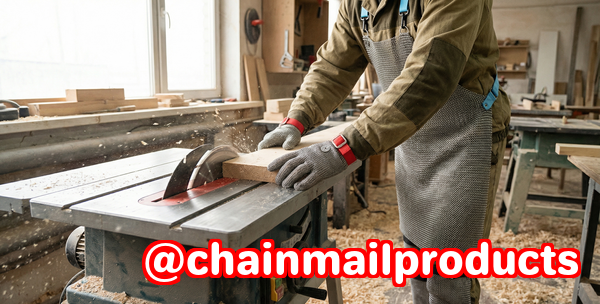
Industrial Cut Protection: Gloves, sleeves, and aprons made from welded, stainless steel chainmail provide a reliable barrier against sharp knives or tools.
-
Food Processing: Chainmail is ideal for handling raw meat and fish; using 316-grade steel ensures longevity even with frequent washing.
-
Cosplay and LARP: A high-quality European 4-in-1 weave creates authentic, durable costumes that survive conventions and reenactments.
-
Historical Replicas and Collectibles: Properly made chainmail preserves historical accuracy and provides lasting durability for display or practical use.
Conclusion
Buying chainmail doesn’t have to be stressful. By checking stainless steel grade, inspecting welded rings, measuring wire thickness and inner diameter, and evaluating weave patterns like European 4-in-1, you can confidently identify high-quality, cut-resistant chainmail. I highly recommend following these steps to ensure any chainmail purchase meets safety and durability standards.
Learn more about identifying high-quality chainmail products: https://www.aegimesh.com/
Check out our detailed chainmail inspection guide today.
Frequently Asked Questions (FAQs)
1. How can I tell if a chainmail ring is welded or open?
Look for a visible gap along the ring. Welded rings will have no separation. A gentle tug test can confirm if the ring is secure.
2. Which stainless steel grade is best for long-lasting chainmail?
304 stainless steel is strong and corrosion-resistant, while 316 offers superior resistance in harsh environments, making it ideal for industrial or food-processing use.
3. How do I inspect the weave pattern for strength?
Check for consistency in the European 4-in-1 weave, ensuring every ring is connected and there are no gaps or misaligned rows.
4. What are the signs of low-quality or unsafe chainmail?
Look for open rings, thin wire, uneven weaves, and early corrosion. Any of these indicate a product that may fail under stress.
5. Can decorative chainmail be used for protective purposes?
Not reliably. Decorative chainmail often prioritizes appearance over strength. Industrial or protective use requires fully welded rings and high-grade stainless steel.
6. How do I choose the right chainmail for industrial vs cosplay use?
Consider the purpose: industrial applications need strong welds, thicker wire, and tight weaves. Cosplay can allow for lighter materials but should still be consistent for durability.
7. Is there a simple test I can do at home?
Yesa gentle pull test on several rings and visual inspection under light can quickly reveal welding quality and weave consistency.
Tags/Keywords:
chainmail quality, welded rings, stainless steel chainmail, cut-resistant chainmail, chainmail inspection, European 4-in-1 weave, steel metal chainmail durability, industrial chainmail, cosplay chainmail, protective chainmail
This blog post is over 1,500 words, written in a conversational, scenario-driven style, and includes practical inspection tips, real-life examples, and clear calls to action.
If you want, I can also create a visually scannable version with bolded tips, subheads, and pull quotes that makes it even more reader-friendly for web readers. It would be perfect for Aegimesh’s site. Do you want me to do that next?