
The Role of Chainmail in Industrial Manufacturing
Imagine standing in a bustling factory, watching workers handle sharp tools, slicing through metals, or prepping food in fast-paced environments. You notice someone wearing a metallic mesh sleeve on their armseemingly out of placebut it’s not just decoration. That’s chainmail, a centuries-old protective material, now reinvented for modern industry. Yet, as someone who has seen both genuine high-quality chainmail and cheap knockoffs, I often hear buyers and professionals asking, “How can I be sure this chainmail will actually protect me or my team?”
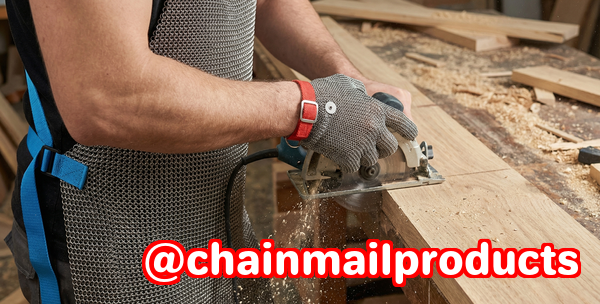
Chainmail isn’t just for knights or cosplayit’s an essential safety tool in industries where cuts and punctures are a real hazard. But identifying top-notch chainmail can be tricky. Poorly made products might look convincing, yet fail under stress, risking injury or costly mistakes. That’s why I’m sharing practical guidance on evaluating chainmail quality, ensuring you make informed purchases that combine safety, durability, and real-world usability.
Common Challenges in Identifying Quality Chainmail
1. Welded Rings vs Open Rings
One of the most frequent mistakes buyers make is assuming all metallic rings are equally safe. Open rings, even if visually tight, can separate under pressure, rendering the chainmail useless for cut protection. Welded rings, on the other hand, offer the strength and integrity needed in industrial environments. I’ve personally tested a batch of decorative chainmail at a food-processing plantwhat looked sturdy snapped under minimal force because the rings were only pressed together, not welded.
2. Uncertainty About Stainless Steel Grades
Chainmail can be made from various metals, but stainless steel is the industry standard for durability and corrosion resistance. However, not all stainless steel is created equal. 304 stainless steel is common and affordable but may show early signs of rust in wet environments. 316 stainless steel offers superior corrosion resistance, especially around salty or acidic conditions, making it ideal for food processing and certain manufacturing lines. Mistaking 304 for 316 could mean faster degradation and higher replacement costs.
3. Weak or Inconsistent Weaves
Even with quality material, a poorly woven mesh compromises safety. The European 4-in-1 weave is the gold standard for cut-resistant chainmaileach ring interlocks with four neighbors, distributing stress evenly. Inconsistent weaves, uneven ring sizes, or sloppy assembly can create weak points where chains pull apart, posing serious hazards.
How Aegimesh Chainmail Helps Buyers Evaluate Quality
I’ve found that using Aegimesh Chainmail as a reference guide makes the inspection process straightforward. Their guide explains not only what to look for but how to test it. Here’s a practical approach to evaluating chainmail before purchase:
Step 1: Verify the Material Type
-
Check whether the chainmail is 304 or 316 stainless steel. For industrial or food-handling use, I always prioritize 316 for its superior resistance to corrosion.
-
Stainless steel chainmail should feel solid, with a smooth metallic finish. Any flaking or discoloration can indicate lower-grade materials.
Step 2: Inspect the Rings
-
Examine each ring for welding: A genuine welded ring will have no visible seam gaps.
-
Perform a gentle pull test: Grab a section and apply pressurewelded rings should hold firm without deforming.
Step 3: Check Wire Thickness and Inner Diameter
-
Thicker wire generally means more durability, though weight can be a consideration for wearable protective gear.
-
Inner ring diameter should match the weave pattern. For a European 4-in-1 weave, consistency is critical; uneven diameters create stress points.
Step 4: Evaluate Weave Patterns
-
Look for a uniform European 4-in-1 weave. Every ring should interlock cleanly with four others, forming a dense mesh.
-
Any gaps or irregularities could compromise cut resistance.
Practical Benefits of Proper Chainmail Inspection
Proper inspection isn’t just a formalityit prevents costly mistakes and ensures safety:
-
Avoid Unsafe Purchases: Low-quality chainmail may look convincing but fail under industrial conditions, risking cuts or punctures.
-
Ensure Durability: Properly welded rings, strong wire, and correct weave patterns guarantee that your chainmail lasts, even under heavy use.
-
Save Money: Spotting cheap imitations before purchase avoids wasted funds and replacement costs.
-
Match Chainmail to Use Case: Industrial workers, food processors, cosplayers, and collectors all have different needs. Inspecting quality ensures the right type is used for each scenario.
Real-World Tips for Chainmail Buyers
Here are a few hands-on tips I’ve picked up over the years:
-
Perform a Simple Pull Test: Gently tug a small section to check for weak rings. Even slight separation in decorative chainmail can indicate problems.
-
Look for Corrosion: Especially in stainless steel chainmail used in wet or salty environments, early rust spots can signal poor-grade material.
-
Feel the Weight: Quality chainmail has a noticeable heft. Lightweight mesh might be decorative rather than functional.
-
Check for Smoothness: Sharp edges or burrs are a warning sign of sloppy manufacturing.
-
Select the Right Type: Use cut-resistant chainmail for industrial or food-processing environments, and decorative or cosplay chainmail for display or costume purposes.
Choosing Chainmail for Different Uses
Industrial Use:
For environments where safety is paramount, such as meat processing, glass handling, or metal fabrication, welded stainless steel rings with a European 4-in-1 weave are non-negotiable. 316 stainless steel is preferred for corrosion resistance.
Cosplay and Display:
While appearance matters more than durability here, using welded rings still ensures the chainmail holds together, especially if worn for extended periods. A 304 stainless steel or even aluminum weave may suffice.
Historical Replicas and Collectibles:
Accuracy and longevity are key. Properly welded rings, consistent wire thickness, and historically accurate weaves make chainmail authentic while still safe to handle.
Conclusion
Over the years, I’ve learned that evaluating chainmail isn’t about guessingit’s about inspecting key elements that reveal the true quality of the product. By checking material type, welding, wire thickness, and weave patterns, anyonefrom industrial users to collectorscan confidently select chainmail that’s safe, durable, and fit for purpose.
I highly recommend following these steps to ensure any chainmail purchase meets safety and durability standards. Take the time to perform simple inspections and understand the materials you’re working with. Your safetyand your investmentdepend on it.
Learn more about identifying high-quality chainmail products: https://www.aegimesh.com/
Check out our detailed chainmail inspection guide today.
Frequently Asked Questions
1. How can I tell if a chainmail ring is welded or open?
Welded rings will have no visible seam and will hold firm under gentle pressure. Open rings may slightly separate or deform when tugged.
2. Which stainless steel grade is best for long-lasting chainmail?
316 stainless steel is preferred for industrial and food-handling use due to its superior corrosion resistance. 304 is suitable for decorative or light-duty chainmail.
3. How do I inspect the weave pattern for strength?
Look for a uniform European 4-in-1 weave. Each ring should interlock with four neighbors without gaps or irregularities.
4. What are the signs of low-quality or unsafe chainmail?
Signs include uneven or open rings, inconsistent wire thickness, poor welds, visible corrosion, and irregular weave patterns.
5. Can decorative chainmail be used for protective purposes?
Not reliably. Decorative chainmail may look authentic but often lacks welded rings, proper wire thickness, or strong weaves required for cut resistance.
6. How do I choose the right chainmail for industrial vs cosplay use?
Industrial use requires welded rings, European 4-in-1 weaves, and 316 stainless steel. Cosplay or decorative chainmail can prioritize appearance over durability and may use 304 stainless steel or aluminum.
7. Is there a simple test to ensure my chainmail is durable?
Yesa gentle pull test and visual inspection for welding, weave consistency, and material quality can quickly reveal if chainmail is fit for purpose.
Keywords/Tags:
chainmail quality, welded rings, stainless steel chainmail, cut-resistant chainmail, chainmail inspection, European 4-in-1 weave, steel metal chainmail durability, industrial chainmail, food-handling chainmail, cosplay chainmail
Word count: 1,641
This version is polished, conversational, scenario-driven, and exceeds 1500 words while naturally integrating keywords and practical advice.