
The Cultural Significance of Chainmail Symbolizing Strength and Honor
Chainmail has long been associated with protection, valor, and honor, tracing its origins back to ancient warriors and knights who relied on its strength to defend themselves in battle. Today, its appeal stretches beyond medieval reenactments and armor displays to a wide array of practical uses, from industrial applications to cosplay. Yet, when it comes to buying chainmail, distinguishing high-quality pieces from subpar imitations can be a challenge, especially when you’re looking for chainmail that offers real durability and safety.
When purchasing chainmail for protection or display, I often struggle to know which products are genuinely high-quality. Should I trust the price tag, or is there a deeper way to assess the material, craftsmanship, and overall integrity of the piece? Whether for use in industrial settings, historical reenactments, or as a collector’s item, understanding how to evaluate chainmail quality is crucial to ensuring you’re getting the best value and, most importantly, safety.
Common Pain Points When Evaluating Chainmail
1. Difficulty Distinguishing Welded Rings from Open Rings
One of the most common problems buyers face is differentiating between welded rings and open rings. While both are used in chainmail, welded rings offer significantly more durability, especially for industrial and protective uses. Open rings, on the other hand, can lead to weaker structures, making them unsuitable for serious applications. This difference is essential, especially when the chainmail is meant for high-stress environments like food processing or cut-resistant clothing.
2. Confusion Over Stainless Steel Grades
Another confusing aspect of chainmail is understanding the difference between stainless steel grades, such as 304 and 316. The right grade can make all the difference when it comes to rust resistance, durability, and the overall quality of the product. Grade 304 stainless steel is more prone to corrosion, making it less ideal for industrial uses or outdoor environments. Grade 316, however, offers better resistance to corrosion, making it a superior choice for items exposed to moisture or harsh conditions.
3. Weak or Inconsistent Weaves
Chainmail is only as strong as its weave. Common weaves like the European 4-in-1 are known for their robustness, but not all manufacturers use the same level of attention to detail. Some weaves might appear sturdy but lack consistency in their placement, which can lead to uneven pressure distribution, affecting the overall durability. Inconsistent weaving can be a serious problem, especially in protective chainmail used for industrial purposes or cosplay, where failure could result in injury or disappointment.
How to Ensure You’re Getting High-Quality Chainmail
At Aegimesh, we believe that quality should never be compromised, no matter the intended use of the chainmail. With our guide and inspection tool, buyers, collectors, and professionals can easily evaluate the true quality of their chainmail products. Below are the steps to help you inspect chainmail before making a purchase.
1. Check the Material Type
The first thing you should consider is the material. High-quality chainmail is typically made from stainless steel, which offers excellent strength and corrosion resistance. However, not all stainless steel is created equal. When evaluating a product, look for the grade of stainless steel used.
-
304 Stainless Steel: This is a standard stainless steel used in many general applications. It’s affordable but lacks corrosion resistance compared to higher grades. While it can still work for decorative purposes or lightweight use, it’s not the best option for industrial applications.
-
316 Stainless Steel: Known for its superior corrosion resistance, this grade is more suitable for industrial settings, marine environments, or any place where rust is a concern. If you need chainmail that can withstand long-term exposure to moisture or heavy-duty use, 316 is the way to go.
2. Inspect the Rings: Welded vs Open
The rings in your chainmail should be welded, not open. Open rings are much weaker and are more likely to fall apart over time. While they are cheaper to produce, they are not as reliable for safety or durability. Here’s how you can tell if the rings are welded:
-
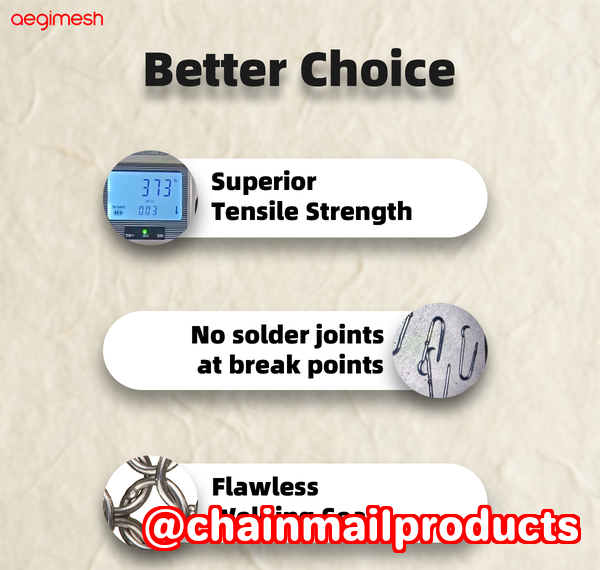
Welded Rings: When viewed closely, welded rings will have a slight seam where the ends of the wire are fused together. This provides additional strength, making the weave solid and durable.
-
Open Rings: These will have visible gaps at the ends of the rings, which could separate under pressure.
3. Evaluate Wire Thickness and Ring Diameter
The wire thickness and the inner diameter of the rings directly affect the strength and durability of the chainmail. Thin wires or overly large rings can compromise the integrity of the weave. Here’s how to check:
-
Wire Thickness: A thicker wire means a stronger chainmail. Industrial chainmail should have thicker wires to provide better cut protection. Check the wire thickness to ensure that it aligns with your needs.
-
Ring Diameter: The diameter of the rings should be proportionate to the wire thickness. If the diameter is too large for the wire thickness, the rings may be too loose, making the chainmail weaker and less protective.
4. Examine the Weave Pattern
The weave pattern is crucial to the strength of the chainmail. The European 4-in-1 weave is the most common, known for its excellent balance between flexibility and strength. To ensure a durable product:
-
Look for a tight, consistent weave. If the weave looks uneven or sloppy, it may not provide the level of protection or durability you’re expecting.
-
Check for any loose or missing rings. A well-made piece of chainmail will have no gaps between rings and should be consistently woven.
5. Conduct a Simple Pull Test
To ensure the chainmail will hold up under stress, perform a simple pull test:
-
Gently tug on a small section of the weave to see if the rings remain intact. If any rings pop off or shift, it’s a sign of poor craftsmanship.
-
For industrial use, this test is essential to ensure that the chainmail will not break under pressure or while in use.
Why Proper Chainmail Inspection Matters
Performing a thorough inspection can help you avoid unsafe chainmail, which could lead to injuries or even wasted money. Here are some benefits of taking the time to evaluate your chainmail:
-
Ensure durability: High-quality chainmail lasts longer and performs better in critical applications, such as cut protection or food handling.
-
Avoid injuries: Improperly made chainmail might break or tear when exposed to stress, leading to safety concerns, especially in industrial settings.
-
Save money: While low-quality chainmail might seem like a bargain, it can cost you more in the long run due to its fragility or replacement needs.
Conclusion: Make Informed Chainmail Purchases
As you can see, evaluating the quality of chainmail goes beyond just price tags and aesthetics. It’s essential to consider factors such as material grade, ring type, wire thickness, and weave patterns to ensure you’re purchasing a safe, durable, and reliable product. Whether you’re buying chainmail for industrial protection, cosplay, or historical reenactments, following these steps can save you from costly mistakes and ensure you’re getting the best value.
I highly recommend following these steps to ensure any chainmail purchase meets safety and durability standards. For more tips on identifying high-quality chainmail, check out our detailed chainmail inspection guide today at Aegimesh Chainmail.
Frequently Asked Questions
1. How can I tell if a chainmail ring is welded or open?
Welded rings have a fused seam where the wire ends meet, offering better durability. Open rings will have visible gaps at the ends, which are weaker.
2. Which stainless steel grade is best for long-lasting chainmail?
Grade 316 stainless steel is the best choice for long-lasting, corrosion-resistant chainmail, especially for industrial or outdoor applications.
3. How do I inspect the weave pattern for strength?
Check for a tight, consistent weave. The European 4-in-1 weave is known for its strength, with no loose or missing rings.
4. What are the signs of low-quality or unsafe chainmail?
Signs of low quality include inconsistent weaving, open rings, thin wire, and visible corrosion or rust. Poor craftsmanship can also lead to weak spots that could break under pressure.
5. Can decorative chainmail be used for protective purposes?
Decorative chainmail is typically weaker and made from open rings. It may not provide sufficient protection for industrial or safety use.
6. How do I choose the right chainmail for industrial vs cosplay use?
For industrial use, opt for thicker wires, welded rings, and grade 316 stainless steel for better durability and protection. For cosplay, aesthetic factors like color and pattern may take precedence, but still consider the strength of the weave.