
Steel vs Aluminum: Which is Better for Chainmail?
When you’re searching for chainmail, whether for cosplay, historical reenactments, or industrial applications like cut protection, you’re probably thinking about strength, durability, and safety. It’s not always easy to tell which material or type of chainmail will deliver the protection you need. A common debate is between steel and aluminumtwo metals that both serve their purposes but have distinct qualities. So, which is better for chainmail? Let’s break it down.
A Common Dilemma: Picking the Right Material for Chainmail
I’ve heard it countless times: “Which is the best material for my chainmail?” Whether you’re a collector, cosplayer, or someone in need of chainmail for industrial use, it’s a question that often arises. The decision can be tricky. Should you go for the classic steel chainmail that offers great durability and strength? Or is aluminumlighter, more affordable, and easier to wearbetter for your specific needs?
Let’s take a deeper look at the differences and help you make an informed decision. Whether you’re worried about safety, comfort, or just getting the most out of your budget, understanding how to evaluate chainmail quality can make a world of difference.
Understanding Steel and Aluminum for Chainmail
To begin with, steel and aluminum both have their strengths, but they also come with trade-offs.
-
Steel Chainmail: The Heavy Duty Choice
Steel has been the material of choice for traditional chainmail for centuries. Its strength and durability make it ideal for a range of uses, from historical reenactments to industrial applications. Here’s why steel might be the better option for certain scenarios:
-
Durability and Strength: Steel, especially stainless steel, is extremely strong and resistant to wear and tear. It can stand up to repeated use, whether you’re using it for industrial work like cut protection or wearing it as part of a cosplay costume.
-
Heavy-Duty Protection: For industrial use, stainless steel chainmail offers great cut resistance. It’s often used in industries like food processing, where workers need to protect themselves from sharp knives or other equipment.
-
Classic Look and Feel: Steel gives that authentic medieval look, which is why it’s favored for historical replicas and cosplay. The weight and feel of real steel chainmail often add to the experience.
But with all its positives, steel isn’t perfect for every situation.
-
Weight: Steel chainmail is heavier, which can be uncomfortable for long periods, especially in cosplay or if you’re wearing it for a full day. That’s where aluminum can shine.
-
Aluminum Chainmail: The Lightweight Alternative
Aluminum, on the other hand, offers some significant advantages in certain situations.
-
Lightweight and Comfortable: Aluminum chainmail is much lighter than steel, making it ideal for use in cosplay or for collectors who don’t want to deal with the weight of traditional steel mail. It’s also great for situations where comfort and mobility are important.
-
Cost-Effective: Aluminum is generally less expensive than steel. This makes it an attractive choice for people on a budget or those looking for decorative chainmail without the hefty price tag.
-
Corrosion Resistance: Aluminum is naturally resistant to corrosion, which can be an important factor in some industries. For example, if you’re using chainmail in humid environments or for display purposes, aluminum might hold up better over time than steel.
However, aluminum doesn’t come without its own drawbacks.
-
Less Strength: While aluminum can still provide some protection, it doesn’t have the same cut resistance or overall strength as steel. This makes it less suitable for heavy-duty industrial use.
-
Less Durability: Aluminum is more prone to denting or bending, and it won’t offer the same level of protection in high-impact situations.
How to Evaluate Chainmail Quality: Steel or Aluminum?
Choosing between steel and aluminum isn’t the only factor to consider when buying chainmail. Whether you’re purchasing for industrial use, cosplay, or as part of a collection, it’s essential to know how to inspect the chainmail for quality. Even within the same material, chainmail can vary greatly in quality, and the last thing you want is to end up with something that doesn’t meet your needs.
Here’s a step-by-step guide on how to evaluate the quality of chainmail:
1. Inspect the Material
-
Steel Quality: Make sure the steel is of the right grade. Stainless steel, especially grades like 304 or 316, is durable and resistant to corrosion. For heavy-duty industrial use or cut resistance, 316 stainless steel is often preferred because it offers greater corrosion resistance.
-
Aluminum Quality: If you’re going for aluminum, make sure it’s anodized or treated to prevent corrosion, especially if you plan on using it in a humid environment or for outdoor cosplay.
2. Look at the Rings: Welded or Open?
-
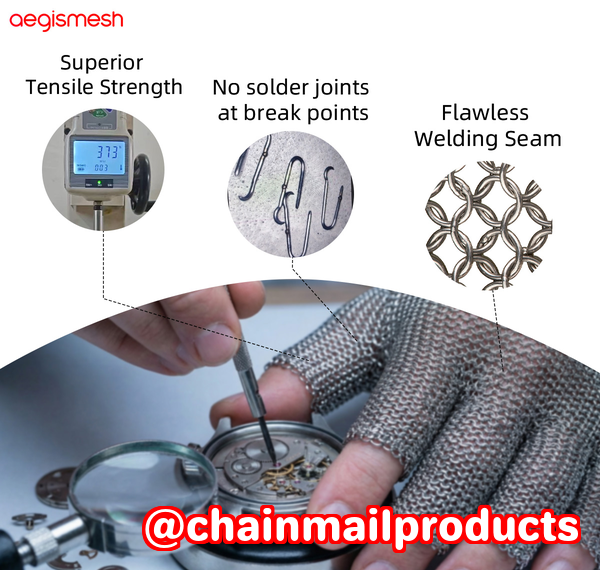
Welded Rings: High-quality chainmail typically uses welded rings, which are more secure and less likely to open up under pressure. Welded rings also offer better durability for industrial applications, as they can withstand stress better than open rings.
-
Open Rings: While open rings may be used in decorative chainmail, they’re not as secure and are usually more suitable for light-duty uses like cosplay or display.
Tip: Perform a simple pull test by gently tugging on the rings. If the rings come apart easily, they are likely open rings or poorly welded.
3. Examine the Wire Thickness and Inner Diameter
The wire thickness and inner diameter are crucial to the chainmail’s strength and comfort.
-
Wire Thickness: Thicker wire increases durability and strength, but it also adds weight. For heavy-duty use like industrial cut protection, thicker wire is a must.
-
Inner Diameter: The size of the rings’ inner diameter determines how tightly the chainmail weaves together. The European 4-in-1 weave is popular because it provides a strong, secure pattern.
4. Check the Weave Pattern
-
The European 4-in-1 weave is the most common and is known for its balance of flexibility and strength. This pattern is used in both steel and aluminum chainmail and provides good coverage and protection.
Tip: Look for evenness in the weave. Inconsistent weaving can indicate poor craftsmanship and reduce the overall strength of the chainmail.
5. Look for Signs of Corrosion or Damage
-
For steel, look for any signs of rust or discoloration, especially around the rings. Stainless steel should not rust easily, but poorly treated or lower-quality steel can still corrode.
-
For aluminum, make sure there are no signs of pitting or other forms of damage that can weaken the material.
Tip: If you’re purchasing chainmail for industrial use or safety, this is especially important to ensure the material can withstand harsh conditions.
6. Know Your Intended Use
Finally, it’s essential to match the chainmail’s quality to its intended use:
-
Industrial and Cut-Resistant Use: Steel is the best choice for industrial and cut-resistant chainmail, especially for food processing or manufacturing settings.
-
Cosplay and Decorative Use: Aluminum may be the better choice for cosplay or decorative chainmail. It’s lightweight and cost-effective, allowing you to wear it for longer periods without too much discomfort.
Conclusion: Making the Right Choice
At the end of the day, whether you choose steel or aluminum for your chainmail depends on your specific needs. Steel offers durability, strength, and long-lasting protection, while aluminum offers comfort and cost-effectiveness.
I highly recommend following these inspection methods when purchasing chainmail, regardless of the material. This will help ensure that your chainmail meets the necessary safety and durability standards, whether you’re buying it for industrial use, cosplay, or as part of a collection.
Want to learn more about identifying high-quality chainmail products? Check out our detailed chainmail inspection guide today.
FAQs
-
How can I tell if a chainmail ring is welded or open?
-
Perform a pull test. Welded rings will remain intact, while open rings can easily separate.
-
-
Which stainless steel grade is best for long-lasting chainmail?
-
316 stainless steel offers the best corrosion resistance and is ideal for industrial applications.
-
-
How do I inspect the weave pattern for strength?
-
Look for the European 4-in-1 weave, which provides balance and durability. Ensure the pattern is even and tight.
-
-
What are the signs of low-quality or unsafe chainmail?
-
Poor welding, inconsistent weaves, rust or corrosion, and weak wire thickness are signs of low-quality chainmail.
-
-
Can decorative chainmail be used for protective purposes?
-
Decorative chainmail made of aluminum is generally not strong enough for industrial protection but can work for cosplay or display.
-
-
How do I choose the right chainmail for industrial vs cosplay use?
-
For industrial use, opt for strong, welded steel rings. For cosplay, lightweight aluminum chainmail may be a better fit for comfort.
-
Tags/Keywords:
-
chainmail quality, welded rings, stainless steel chainmail, cut-resistant chainmail, chainmail inspection, European 4-in-1 weave