
Steel Metal Chainmail Selection Guide for Factories
When it comes to purchasing chainmail for professional or personal use, whether for industrial applications, food processing, or cosplay, one of the most frequent questions I hear is: How do I know if the chainmail I’m buying is high-quality and safe for its intended purpose? With so many options on the market, it’s no wonder buyers struggle with distinguishing high-quality chainmail from cheaper, often unsafe alternatives.
If you’ve ever been unsure about what to look for when choosing the right chainmail, you’re not alone. In this guide, I’ll walk you through how to identify quality chainmail products, using practical tips that anyone can follow. Let’s dive into the essentials of chainmail inspection and quality assurance to ensure you make an informed and reliable purchase, whether it’s for industrial cut protection, a cosplay project, or historical reenactments.
Common Problems with Chainmail Purchases
Buying chainmail isn’t as simple as picking up a product and assuming it’s durable and safe. Over the years, I’ve encountered a few key issues that buyers often face:
-
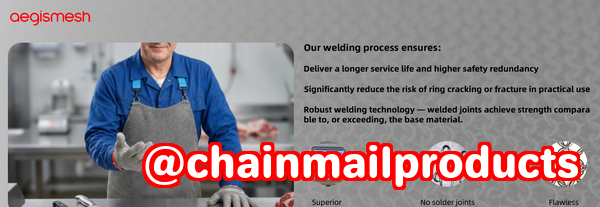
Distinguishing Between Welded Rings and Open Rings: A welded ring ensures durability and longevity, while open rings can compromise the integrity of the chainmail, leading to breakage under stress.
-
Confusion About Stainless Steel Grades: Not all stainless steel is made the same. Grades like 304 and 316 are popular for chainmail, but how do you know which is best for your needs? Many buyers make the mistake of choosing a cheaper grade, which can result in corrosion or a lack of durability.
-
Weak or Inconsistent Weaves: Weaving plays a huge role in the strength of chainmail. If the weave pattern is inconsistent, the chainmail may not provide the level of protection needed for industrial or protective uses.
In this guide, I’ll show you how to inspect chainmail to avoid these issues and ensure your investment is worthwhile. With Aegimesh’s Chainmail inspection tools and recommendations, you’ll be able to quickly spot whether a product is high-quality or not.
How to Inspect Chainmail Quality: The Basics
Material Type: The first thing you want to check when evaluating chainmail is the material. Aegimesh Chainmail, for instance, offers two primary grades of stainless steel: 304 and 316.
-
304 Stainless Steel: This is the most common type of stainless steel used for chainmail. It’s corrosion-resistant and offers decent strength for most uses, but it’s not as resistant to extreme conditions as 316.
-
316 Stainless Steel: This is a more durable, corrosion-resistant grade, especially in harsh environments like saltwater or extreme temperatures. If your chainmail will be used in environments like food processing or heavy industrial applications, 316 is the better choice.
Ring Type: The next crucial inspection point is to look at whether the chainmail rings are welded or open.
-
Welded Rings: These are fused together at the edges, ensuring they stay securely locked in place. This makes them ideal for protective chainmail, especially in environments where safety is critical, such as industrial workplaces or military use.
-
Open Rings: These rings are not welded and are usually cheaper. However, they can break or open under stress, so they’re not suitable for high-performance applications.
Wire Thickness and Ring Diameter: A critical factor in the durability of chainmail is the wire thickness and ring diameter. These affect both the weight and strength of the product. For industrial applications, a thicker wire will usually provide better protection, while a smaller diameter might be sufficient for decorative or cosplay use. When inspecting chainmail, look at the thickness of the wire used and ensure that the diameter of the rings is consistent across the entire product.
Weave Patterns: The weave pattern is what holds everything together. Some common patterns include:
-
European 4-in-1 Weave: This is the most popular and strong weave pattern for protective chainmail. It offers great coverage and durability, making it ideal for industrial or historical use.
-
Other Weave Patterns: For decorative or cosplay purposes, other weaves like 6-in-1 or 8-in-1 may be used, but they won’t always offer the same level of strength.
Tips for Inspecting Chainmail in Detail
Here are a few practical tips you can follow to inspect chainmail in a real-world scenario. With these tips, you’ll easily be able to distinguish high-quality products from low-quality imitations:
-
The Pull Test: Gently tug on individual rings to test the welds. Welded rings should hold firm without breaking, while open rings may shift or even snap. If the chainmail feels fragile, it’s a sign that it’s not up to par.
-
Look for Signs of Corrosion: While stainless steel is generally corrosion-resistant, lower-quality steel may show signs of rust or wear. Check the surface of the rings closely for any signs of pitting or corrosion, especially if the chainmail will be exposed to moisture.
-
Examine the Weave Pattern: The weave pattern should be uniform. Look for gaps or loose rings within the weave. If the pattern isn’t consistent, it might indicate poor craftsmanship or weaker overall strength.
-
Check Ring Diameter and Wire Thickness: If you’re unsure, compare the rings’ thickness and diameter against a known standard for your intended application. For example, industrial-grade chainmail will typically have larger, thicker rings than decorative pieces.
Why Quality Matters: The Benefits of Proper Chainmail Inspection
When you take the time to inspect your chainmail carefully, you’re not only ensuring the product’s durability but also avoiding potential safety risks. Here’s why proper inspection matters:
-
Safety First: When using chainmail for industrial protection or food handling, it’s critical that the rings are securely fastened and that the material is high-quality. Poorly constructed chainmail can lead to injuries if it fails under pressure.
-
Durability: High-quality chainmail will last longer, making it a better long-term investment. Low-quality chainmail, on the other hand, may wear down quickly and fail to provide the protection or aesthetic value you’re seeking.
-
Cost Efficiency: By investing in quality chainmail, you’ll save money in the long run. Poor quality products often need to be replaced more frequently, while well-constructed chainmail will continue to perform as expected for years.
Conclusion: Make Informed Chainmail Purchases
Now that you know how to inspect chainmail effectively, I highly recommend following these steps when making your next purchase. Whether you’re purchasing chainmail for industrial use, food processing, cosplay, or historical reenactments, these inspection techniques will help you ensure you’re getting the best quality product.
Get started today by exploring Aegimesh Chainmail, where we provide detailed guides and tools to help you select the perfect chainmail for your needs.
For more information on evaluating chainmail, check out our detailed inspection guide at Aegimesh Chainmail.
Frequently Asked Questions (FAQs)
-
How can I tell if a chainmail ring is welded or open?
Look closely at the edges of the rings. Welded rings will have a visible joint where the edges are fused together, while open rings will have a small gap between the ends.
-
Which stainless steel grade is best for long-lasting chainmail?
For most industrial and protective uses, 316 stainless steel is the best choice due to its superior corrosion resistance. However, for decorative purposes, 304 stainless steel is usually sufficient.
-
How do I inspect the weave pattern for strength?
Check the weave to ensure the rings are tightly interlocked without any gaps. A consistent European 4-in-1 weave is a good indicator of strong, durable chainmail.
-
What are the signs of low-quality or unsafe chainmail?
Look for rust, poor craftsmanship, inconsistent ring sizes, weak welds, and loose or broken rings. These are all signs that the chainmail might not provide the protection you need.
-
Can decorative chainmail be used for protective purposes?
It depends on the weave and material. Decorative chainmail made with thinner wire or weaker weaves is not recommended for protective purposes. Always opt for industrial-grade chainmail when safety is a concern.
-
How do I choose the right chainmail for industrial vs. cosplay use?
For industrial use, choose thicker rings and a welded weave pattern, like the European 4-in-1. For cosplay or decorative purposes, lighter, more flexible options may suffice, but ensure the rings are still durable enough for your needs.