
Steel Metal Chainmail Cost Analysis for Companies: How to Evaluate Quality and Make Informed Decisions
When purchasing steel chainmail, whether for industrial use, cosplay, or historical reenactments, it’s easy to get overwhelmed by the variety of options available. One of the most common concerns I hear from buyers is: “How do I know if I’m getting high-quality chainmail that will actually serve its purpose?” Whether you’re looking for something for safety or simply for display, the quality of the chainmail can vary widely. In this post, I’ll guide you through the key factors you need to look for when assessing chainmail quality, so you can make informed decisions that save you money and ensure your purchase meets safety and durability standards.
Understanding the Basics of Chainmail
Chainmail, or chainmaille, is a type of protective armor made from interconnected rings. It’s been used for centuries in various forms for both combat and protection. Today, it still plays a key role in industrial settings, cosplay, and as a decorative element. But despite its long history, many buyers still find it difficult to determine which chainmail products are high-quality and which ones are low-grade or unsafe.
If you’ve ever had trouble distinguishing between high-quality and low-quality chainmail, you’re not alone. The challenge is that chainmail comes in many different forms, materials, and construction methods. Here’s how to break it down.
Common Pain Points in Evaluating Chainmail Quality
-
Welded Rings vs. Open Rings
One of the first hurdles many buyers face is understanding the difference between welded and open rings. Welded rings are far more durable, providing a much stronger structure, while open rings tend to be weaker and may even break apart over time. However, welded rings are also more costly to produce, so some manufacturers may cut corners and use open rings to keep prices low.
-
The Right Stainless Steel for Durability
Not all stainless steel is created equal. The most common types used in chainmail are 304 and 316 stainless steel. While 304 steel is cheaper and often used for decorative pieces, it’s more prone to rusting and may not provide the necessary strength for protective applications. On the other hand, 316 stainless steel is more corrosion-resistant, making it ideal for industrial and food-processing environments, where durability and safety are top priorities.
-
Weave Patterns and Durability
The weave pattern is another important factor when it comes to strength. The most commonly used weave for chainmail is the European 4-in-1 weave, where each ring is passed through four other rings, creating a tight, durable pattern. If you’re shopping for chainmail, you’ll want to ensure the weave pattern is tight and consistentloose or inconsistent weaves are often signs of poor craftsmanship, which could lead to a weaker product.
How to Inspect Chainmail Quality
Now that we’ve identified some common issues, let’s talk about how to inspect chainmail for quality. Whether you’re purchasing chainmail for industrial protection or for a cosplay outfit, here are the steps you should follow to ensure you’re getting a high-quality product.
-
Check the Material Type
Before you even start inspecting the rings, you need to determine the material used in the chainmail. The most common materials used are 304 and 316 stainless steel. If you’re buying chainmail for safety (especially in industrial settings), opt for 316 stainless steel. It’s more resistant to corrosion and will last much longer in harsh environments.
-
304 Stainless Steel: Good for decorative or cosplay purposes but may rust or weaken over time.
-
316 Stainless Steel: Best for industrial use or food processing, as it resists corrosion and is highly durable.
-
Inspect the Rings for Welds
Next, inspect each ring in the chainmail. High-quality chainmail will have welded rings. These rings are strong and will not pull apart easily. Open rings, which are just linked together without welding, are a clear indicator of lower-quality chainmail.
A simple pull test can help you determine whether the rings are welded. Hold two adjacent rings and try to pull them apart. If they don’t come apart easily, you’re likely looking at welded rings. If they separate, the chainmail may be constructed with open rings.
-
Examine Wire Thickness and Ring Diameter
The thickness of the wire and the diameter of the rings are critical to the overall strength of the chainmail. Thicker wire means stronger chainmail, but it also means the product will be heavier and stiffer.
To evaluate the wire thickness, take a caliper or ruler and measure the diameter of the wire. Thicker wires provide more protection but may not be suitable for cosplay or decorative uses where flexibility is required. On the other hand, if you’re buying chainmail for cosplay or historical purposes, the wire thickness may need to be lighter for better comfort and flexibility.
Ring diameter also affects the overall integrity of the weave. Rings that are too large or too small can compromise the strength of the chainmail. Aim for a consistent diameter that complements the weave pattern.
-
Assess the Weave Pattern
The European 4-in-1 weave is the most common weave for chainmail used in protective and decorative applications. The weave should be tight, with no loose rings. If you notice that the rings are not tightly interwoven, it could indicate poor workmanship. A tight weave ensures that the chainmail will provide adequate protection and strength.
-
Look for Signs of Corrosion or Poor Craftsmanship
When inspecting chainmail, particularly in industrial or food-processing settings, corrosion is a major concern. Look for signs of rust or discoloration. If you notice any signs of oxidation, the chainmail may not be of the quality you’re looking for.
In addition to corrosion, check the overall craftsmanship. Are the rings uniform in size? Is the weave consistent? High-quality chainmail should look polished and well-constructed.
Why Quality Chainmail Matters
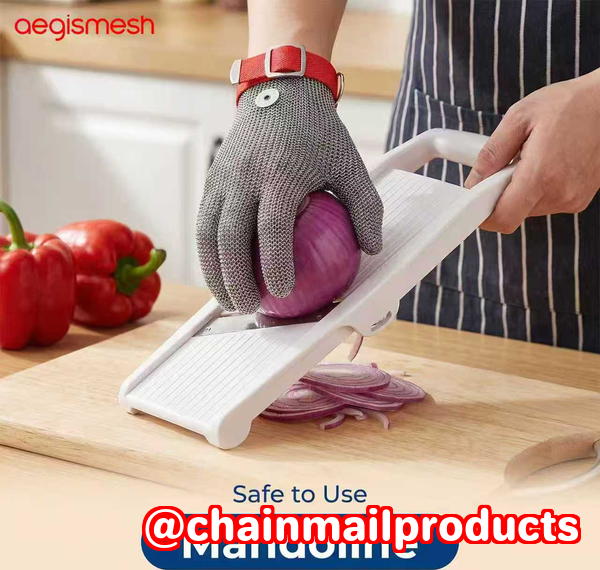
The importance of choosing high-quality chainmail cannot be overstated, especially in environments where safety is crucial. For example, in the food-processing industry, workers rely on cut-resistant chainmail gloves to protect their hands from sharp tools. If the chainmail is low-quality and weak, it could fail at the wrong moment, causing serious injury.
Similarly, if you’re investing in chainmail for cosplay or historical reenactments, you want a product that not only looks authentic but also holds up to wear and tear. A weak or poorly made chainmail shirt can fall apart during a performance or display, ruining your costume.
By following the steps above to inspect your chainmail, you can avoid wasting money on low-quality or unsafe products.
Conclusion: Ensure Safety and Durability with Aegimesh Chainmail
I highly recommend taking the time to properly inspect any chainmail purchase to ensure it meets your safety and durability needs. Whether you’re buying for industrial use, cosplay, or a historical collection, the key to making a smart purchase lies in checking material quality, welds, wire thickness, ring diameter, and the weave pattern.
For anyone looking to take their chainmail knowledge a step further, I recommend checking out Aegimesh’s detailed chainmail inspection guide. Learn how to identify high-quality chainmail and avoid low-quality products that may not meet your needs.
Learn more about identifying high-quality chainmail products: Aegimesh Chainmail Inspection Guide
FAQs
-
How can I tell if a chainmail ring is welded or open?
Perform a pull test. Welded rings will resist separation, while open rings will pull apart easily.
-
Which stainless steel grade is best for long-lasting chainmail?
316 stainless steel is the best choice for long-lasting chainmail, especially for industrial or food-related applications.
-
How do I inspect the weave pattern for strength?
Look for tight, consistent weaving with no loose rings. A well-constructed weave pattern, such as European 4-in-1, is essential for durability.
-
What are the signs of low-quality or unsafe chainmail?
Signs include loose rings, inconsistent weaving, signs of rust or corrosion, and low wire thickness.
-
Can decorative chainmail be used for protective purposes?
While decorative chainmail can look great, it’s generally not strong enough to be used for protective purposes like industrial cut protection.
-
How do I choose the right chainmail for industrial vs cosplay use?
For industrial use, look for chainmail made with 316 stainless steel and a tight, durable weave. For cosplay, choose lighter wire and a less stiff weave for comfort and flexibility.
Tags/Keywords
-
chainmail quality
-
welded rings
-
stainless steel chainmail
-
cut-resistant chainmail
-
chainmail inspection
-
European 4-in-1 weave
-
chainmail durability