
How to Choose the Right Steel Metal Chainmail
When purchasing chainmail, whether it’s for industrial use, cosplay, or historical reenactments, one common concern always stands out: How do I know if I’m getting a high-quality product? This question often arises because chainmail, despite its age-old legacy, can be deceptively tricky to evaluate. Not all chainmail is created equal, and there are several factors that can make or break its quality, safety, and durability. With the growing variety of chainmail options on the market, how do you ensure you’re buying the right one for your needs?
If you’ve ever found yourself staring at a shiny piece of chainmail online or in a store, unsure whether it’s strong enough for its intended purpose, you’re not alone. I’ve been there myself, sifting through countless products, each promising durability and strength. But as I quickly learned, not all chainmail is built to last, and some might even put you at risk depending on its use. That’s why understanding how to assess chainmail quality is crucial.
In this guide, I’ll walk you through how to evaluate chainmail to make sure you’re getting exactly what you need. Whether it’s for protection against cuts in an industrial setting, a showpiece for cosplay, or a sturdy historical replica, you’ll learn how to identify high-quality chainmail every time.
Common Pain Points When Evaluating Chainmail
Evaluating chainmail can seem daunting at first. You might find yourself wondering how to tell the difference between welded rings and open rings, or what kind of steel will give you the best durability for your needs. Here are a few of the most common challenges that buyers face:
-
Welded vs. Open Rings: One of the most important quality checks is distinguishing welded rings from open rings. Open rings are weaker, which can compromise the overall durability of the chainmail, especially in protective applications.
-
Choosing the Right Stainless Steel: Stainless steel grades like 304 and 316 are often used in chainmail production, but knowing the difference and how each grade affects corrosion resistance and strength can be overwhelming.
-
Weave Inconsistencies: Some chainmail may look strong at first glance, but the weave itself could be flawed. If the rings aren’t tightly connected, the chainmail can become fragile or lose its effectiveness over time.
The good news is that there’s a way to evaluate these aspects, and you don’t need to be an expert to get it right. Using a step-by-step approach, you can easily assess the quality of chainmail and avoid the pitfalls of buying low-grade, unsafe, or fragile designs.
How to Inspect and Verify Chainmail Quality
Let’s break down some key areas to focus on when evaluating chainmail. Knowing what to look for will save you money and ensure you’re making a wise purchase.
1. Material Type: 304 vs. 316 Stainless Steel
The material of the chainmail is one of the most important factors in determining its quality. Stainless steel is typically the material of choice, but within the stainless steel category, there are different grades. The most common are 304 and 316 stainless steel.
-
304 Stainless Steel: This is the most common and affordable option for decorative chainmail or light-use applications. While it’s corrosion-resistant, it’s not as durable as 316 when it comes to harsh environments, such as food processing or industrial use.
-
316 Stainless Steel: This grade contains molybdenum, which enhances its resistance to corrosion, especially in saltwater or industrial settings. It’s the best choice for applications where the chainmail will be exposed to extreme conditions.
If you’re buying chainmail for industrial or food processing use, always opt for 316 stainless steel. For cosplay or light decorative purposes, 304 stainless steel is usually sufficient.
2. Inspect the Ring Welding
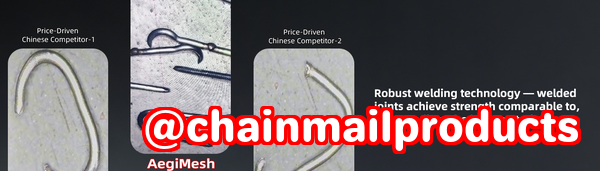
The next step in your inspection should be looking at how the rings are connected. There are two main types: welded rings and open rings.
-
Welded Rings: These are the gold standard when it comes to chainmail strength and durability. The rings are welded together to form a strong, unbreakable bond. This method ensures that the rings won’t separate under pressure, providing long-lasting protection or durability.
-
Open Rings: These are weaker and can easily come apart under stress. Chainmail made from open rings may look fine initially but can break down over time, making it unsuitable for protective uses.
To check if the rings are welded, simply inspect the edges of the rings. A welded ring will have a small, smooth seam where the metal has been fused together, while open rings will have a visible gap between the ends.
3. Wire Thickness and Inner Diameter
The wire thickness and the inner diameter of each ring play a significant role in determining the strength and flexibility of the chainmail. Generally, the thicker the wire, the stronger the chainmail will be. However, thicker rings can also make the chainmail less flexible.
-
Wire Thickness: For industrial uses such as cut resistance or food processing, you’ll want thicker wires for maximum protection. For cosplay, thinner wires are usually sufficient, but they may not offer the same level of durability.
-
Ring Diameter: The diameter of the rings determines how tightly they interlock. A smaller diameter results in a denser weave, providing better protection and durability. For European 4-in-1 weave (one of the most common weaves), the inner diameter should be small enough to ensure the rings don’t shift out of place.
To check wire thickness and ring diameter, use a caliper to measure the rings. Make sure the measurements align with your intended use.
4. Weave Patterns: European 4-in-1
The weave pattern is another key factor in the strength and flexibility of chainmail. The European 4-in-1 weave is one of the most popular patterns and is known for its balance of strength and flexibility.
In this weave, each ring connects to four others, creating a tight, sturdy structure. If the rings are poorly interwoven, the chainmail will be weak and prone to breaking. Check for uniformity in the pattern to ensure the weave is consistent.
5. Simple Pull Test
One of the easiest ways to evaluate the durability of chainmail is through a simple pull test. Take a handful of rings and pull them in different directions. If they hold up under pressure, that’s a good sign. If they start to shift or separate, it’s likely low-quality chainmail.
Why Proper Inspection Matters
Properly inspecting chainmail is crucial for a few reasons:
-
Safety: For industrial or food processing use, poorly made chainmail could fail to protect against cuts, leading to potential injury.
-
Durability: For decorative purposes like cosplay or historical replicas, knowing the right inspection techniques will ensure your chainmail holds up over time.
-
Cost Savings: By identifying low-quality chainmail, you avoid wasting money on items that won’t last or meet your needs.
Conclusion: How to Make the Best Choice
When purchasing chainmail, whether for industrial, decorative, or cosplay purposes, it’s essential to perform a detailed inspection. I highly recommend following the steps outlined above to ensure any chainmail purchase meets safety and durability standards. Whether it’s checking the welds, verifying the material, or assessing the weave pattern, these small efforts can make a world of difference in the quality and longevity of your chainmail.
For those looking for further guidance, I encourage you to learn more about identifying high-quality chainmail products at Aegimesh. Check out our detailed chainmail inspection guide today!
Frequently Asked Questions (FAQ)
1. How can I tell if a chainmail ring is welded or open?
To check if a chainmail ring is welded, inspect the edge of the ring. A welded ring will have a smooth, fused seam, while an open ring will have a visible gap.
2. Which stainless steel grade is best for long-lasting chainmail?
For industrial applications or environments with high corrosion risks, 316 stainless steel is ideal. For decorative uses, 304 stainless steel is usually sufficient.
3. How do I inspect the weave pattern for strength?
Look for even, tight rings in the weave. The European 4-in-1 weave is known for its durability, where each ring interlocks with four others.
4. What are the signs of low-quality or unsafe chainmail?
Signs of low-quality chainmail include open rings, inconsistent weave patterns, thin wire, and rust or corrosion. Always check for these issues to ensure safety.
5. Can decorative chainmail be used for protective purposes?
While decorative chainmail might look appealing, it usually lacks the strength and durability required for protection. Always check the welds and material if you need chainmail for protection.
6. How do I choose the right chainmail for industrial vs. cosplay use?
For industrial use, look for thicker, welded rings made from 316 stainless steel. For cosplay, thinner, lighter chainmail made from 304 stainless steel may be sufficient.
7. How can I ensure my chainmail lasts longer?
Perform regular inspections to check for signs of wear and tear. Store your chainmail in a dry place to avoid corrosion, and consider having it professionally cleaned if it’s used in harsh conditions.
Tags/Keywords:
chainmail quality, welded rings, stainless steel chainmail, cut-resistant chainmail, chainmail inspection, European 4-in-1 weave, chainmail durability