
Cut-Resistant Chainmail: Stainless Steel vs Carbon Steel
When it comes to chainmail, whether you’re a buyer, collector, or professional, choosing the right type can feel overwhelming. With so many different options on the market, how can you be sure that you’re picking a product that’s not only visually appealing but also durable and safe? If you’ve ever found yourself second-guessing the quality of chainmailwhether for industrial protection, cosplay, or historical displayyou’re not alone. For many, it’s a real struggle to distinguish between high-quality chainmail that’s built to last and the cheaper, low-quality alternatives that won’t stand up to wear and tear.
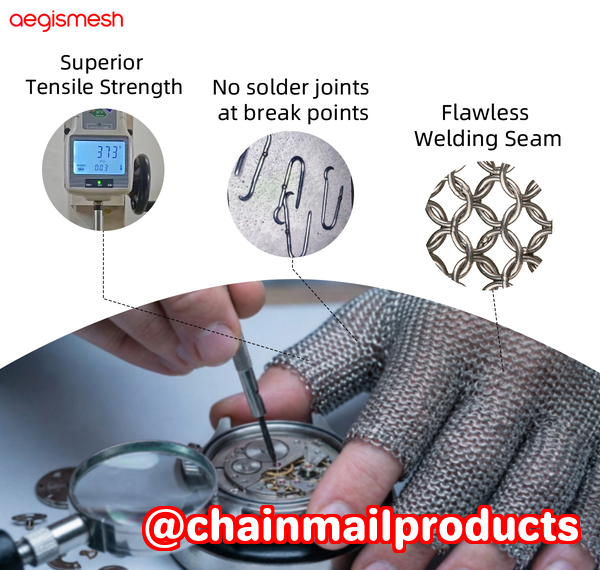
In this post, we’ll walk through how to evaluate the quality of chainmail, with a special focus on the key differences between stainless steel and carbon steel. By the end of this guide, you’ll have the tools you need to make an informed decision when purchasing your next chainmail product.
Understanding the Importance of Chainmail Quality
When you’re looking to buy chainmail, there’s more at stake than just the price tag. While the aesthetic and historical value of chainmail might be your main focus as a collector or cosplayer, for those in industrial settings, quality can mean the difference between safety and injury. You wouldn’t want to rely on chainmail that can’t handle real-world use, especially in situations requiring cut resistance or long-term durability.
But how can you tell if the chainmail you’re eyeing is up to the task? There are a few common pain points that many buyers face when it comes to evaluating chainmail. Let’s dive into these and explore how you can use simple inspection techniques to avoid costly mistakes.
Common Pain Points When Evaluating Chainmail Quality
1. Difficulty Distinguishing Welded Rings from Open Rings
A common mistake many buyers make is assuming that all rings in chainmail are welded. In reality, welded rings are much stronger and more durable than open rings, which are easier to separate and less reliable for cut protection. While open rings might look fine for cosplay or decoration, they won’t hold up in industrial or protective environments.
Tip: The best way to identify welded rings is by checking the seams. A welded ring will have a seamless edge where the metal has been fused together, while an open ring will show a small gap or crack.
2. Uncertainty About Stainless Steel Grades
You may have heard the terms “304 stainless steel” and “316 stainless steel” thrown around when discussing chainmail, but what do they really mean? Simply put, 304 is a general-purpose stainless steel that’s resistant to corrosion, but it can degrade over time in harsh environments. 316 stainless steel, on the other hand, contains molybdenum, which makes it more resistant to corrosion, particularly from saltwater or other corrosive elements.
Tip: If you’re planning to use chainmail in a corrosive environment, like food processing or marine industries, opt for 316 stainless steel for added durability and rust resistance.
3. Weak or Inconsistent Weaves
Even if the material is high quality, the way the chainmail is woven can significantly impact its strength and performance. For instance, the European 4-in-1 weave is known for its durability and flexibility, making it one of the most popular patterns in protective chainmail.
Tip: Look for a consistent, tight weave with no loose rings or weak points. The European 4-in-1 weave will have four rings connecting to each ring in the pattern, providing a dense and sturdy structure.
Evaluating Chainmail: Step-by-Step Inspection Guide
1. Inspect the Material
One of the first steps in determining chainmail quality is checking the material used. For maximum durability and resistance to wear, you’ll want stainless steel over carbon steel. Carbon steel chainmail, while strong, is prone to rust and requires more maintenance. Stainless steel, especially grades like 304 or 316, offers much better corrosion resistance.
How to Inspect: Check the product’s description for the type of steel used. If you’re unsure, you can perform a quick magnet test. Stainless steel is non-magnetic, whereas carbon steel will attract a magnet.
2. Check the Ring Welding
As mentioned earlier, welded rings are a sign of a high-quality chainmail product. Open rings can often be mistaken for welded ones, but they won’t offer the same level of protection or durability. In an industrial setting, a chainmail product with open rings can compromise your safety.
How to Inspect: Look closely at each ring to see if it’s welded shut or if there’s a visible gap. If you see a gap, it’s an open ring. If the metal seems fused without any break, it’s a welded ring.
3. Examine the Wire Thickness and Inner Diameter
The thickness of the wire and the inner diameter of the rings play a big role in the strength of the chainmail. A thicker wire offers more durability, while a smaller inner diameter ensures a tighter, more robust weave.
How to Inspect: Measure the wire thickness using a caliper or micrometer. Also, check the inner diameter of the rings by measuring across the center. If the rings are too large, the weave might not offer the necessary protection or structural integrity.
4. Evaluate the Weave Pattern
The most popular weave for strong, durable chainmail is the European 4-in-1 pattern. This weave provides a balanced mix of flexibility and strength. Look for a tight, uniform weave with no gaps between the rings.
How to Inspect: Look closely at the pattern. The rings should be arranged in a consistent, interlocked manner, with each ring passing through four other rings. This creates a flexible but secure design.
5. Perform a Simple Pull Test
If you want to test the strength of your chainmail, performing a pull test is one of the easiest methods. Gently tug on the rings to see if any come loose. A high-quality chainmail will resist pulling apart and should feel solid to the touch.
How to Perform: Use a small section of the chainmail, hold the rings between your fingers, and gently pull. If the rings shift or separate easily, the chainmail might not be of the best quality.
Why Quality Matters
Whether you’re using chainmail for industrial cut protection, food handling, cosplay, or as a historical replica, ensuring quality is crucial. Low-quality chainmail not only compromises safety but also leads to wasted money on products that break or degrade too quickly.
For industrial applications, a chainmail product with weak rings or poor welding can expose workers to serious injury, especially in environments where sharp tools or machinery are in use. For cosplay or historical reenactment, you want your chainmail to be durable and true to period details, but also comfortable and well-made. And for food processing, safety and hygiene are top prioritiescheap, poorly made chainmail can harbor bacteria or degrade under exposure to harsh conditions.
Conclusion: How to Ensure Your Chainmail is Up to Standard
In summary, I highly recommend following these steps to ensure that any chainmail purchase you make meets the necessary safety and durability standards. Start by inspecting the material to ensure you’re choosing stainless steel over carbon steel. Check the ring welding, wire thickness, and inner diameter to assess durability. And don’t forget to evaluate the weave pattern and perform a simple pull test to confirm that the chainmail will stand up to its intended use.
With the right knowledge, you can confidently buy chainmail products for any purposewhether for industrial use, cosplay, or displaywithout worrying about safety or quality.
Learn more about identifying high-quality chainmail products: Aegimesh Chainmail
Check out our detailed chainmail inspection guide today.
FAQ
1. How can I tell if a chainmail ring is welded or open?
Look closely at the edges of the rings. A welded ring will have a seamless edge, while an open ring will show a visible gap.
2. Which stainless steel grade is best for long-lasting chainmail?
For maximum durability, especially in corrosive environments, 316 stainless steel is the best choice. It resists rust and corrosion better than 304 stainless steel.
3. How do I inspect the weave pattern for strength?
Check for a consistent, interlocking pattern, such as the European 4-in-1. The rings should be tight and securely woven together, with no gaps.
4. What are the signs of low-quality or unsafe chainmail?
Look for inconsistent weave patterns, loose rings, weak welds, and rust or corrosion on the rings.
5. Can decorative chainmail be used for protective purposes?
It depends on the quality. Decorative chainmail often uses open rings and may not provide the necessary protection. Always verify the quality before using it for protective purposes.
6. How do I choose the right chainmail for industrial vs cosplay use?
For industrial use, prioritize durability and safety by choosing welded stainless steel rings with a European 4-in-1 weave. For cosplay, comfort and appearance are key, though still ensure the chainmail is well-made.
7. What’s the difference between stainless steel and carbon steel chainmail?
Stainless steel is more resistant to rust and corrosion, making it ideal for protective and long-term use. Carbon steel, while stronger, is more prone to rusting and requires regular maintenance.
Tags: chainmail quality, welded rings, stainless steel chainmail, cut-resistant chainmail, chainmail inspection, European 4-in-1 weave