
Custom Steel Chainmail: Why Quality Matters
When purchasing chainmail for protection, cosplay, or industrial use, how do you know you’re getting a high-quality product? It’s not always as straightforward as it seems. Many buyers, whether new to chainmail or seasoned professionals, often struggle with distinguishing quality items from low-cost imitations. One common concern I hear frequently from customers is: How can I tell if this chainmail will actually do the job, or if it’s just for show?
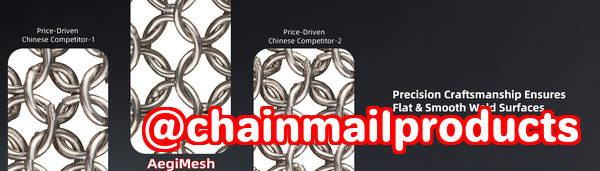
The answer lies in understanding what makes chainmail truly durable and safe. By paying attention to certain quality indicatorslike material type, ring welding, and weave patternsyou can ensure that your chainmail meets the necessary standards. Whether you’re buying for historical reenactments, industrial use, or personal cosplay projects, this guide will help you make informed decisions, avoid unsafe purchases, and save money by spotting low-quality products before it’s too late.
Common Pain Points in Evaluating Chainmail Quality
Let’s be honestchoosing the right chainmail can feel overwhelming. There’s a lot of factors to consider, and not all chainmail products are created equal. As someone who’s been through this process, I know how frustrating it can be to navigate the sea of options. Some common pain points people face when evaluating chainmail quality include:
-
Distinguishing between welded and open rings
This is a major concern, especially when shopping online. While open rings can look just like welded rings, they won’t offer the same durability. Open rings may eventually pull apart, which could compromise the safety of your protective gear.
-
Understanding stainless steel grades
Not all stainless steel is made equal. Grades like 304 and 316 differ in their corrosion resistance and strength. While 304 is commonly used for most products, 316 is the superior choice for chainmail that will see exposure to harsh environments, such as industrial settings or food handling.
-
Weak or inconsistent weaves
Some chainmail products boast a beautiful appearance but lack the strength needed for durability. Weave patterns like the classic European 4-in-1 are standard for a reason: they create a tight, secure mesh that offers both flexibility and strength. But not all weaves are created equal, and some are just for decoration, not real protection.
How to Inspect Chainmail Quality Like a Pro
At Aegimesh, we believe that knowing how to inspect chainmail is the best way to avoid low-quality products and ensure you’re investing in gear that performs. Here are the key steps to follow when assessing chainmail quality:
1. Material Type: Stainless Steel Grades (304 vs 316)
-
304 Stainless Steel: This is the most common grade used for chainmail. It’s generally durable and rust-resistant, but not the best choice for environments exposed to saltwater or harsh chemicals.
-
316 Stainless Steel: Often referred to as “marine-grade” stainless steel, 316 offers better resistance to corrosion, making it ideal for industrial or food-processing applications. If you’re working in these environments, 316 should be your go-to.
2. Inspect the Ring Welding
The key to a strong, durable chainmail piece lies in how the rings are joined. High-quality chainmail will feature welded rings, meaning the ends of the rings are fused together using heat, creating a solid bond. This provides strength and prevents the rings from falling apart over time.
-
How to check: Simply look at the ring edges. Welded rings will have a smooth, seamless edge, while open rings may show gaps where the wire hasn’t been properly connected.
Tip: If you can’t see the welding clearly, try gently pulling on the rings. A welded ring should hold its shape, while open rings might separate under pressure.
3. Ring Thickness and Inner Diameter
The thickness of the wire used to make the rings is another important factor. Thicker wires generally mean stronger chainmail, but they also impact flexibility. For protective chainmail, you want the rings to be thick enough to provide protection but not so thick that they become too stiff to wear comfortably.
-
What to look for: Measure the ring thickness using a caliper or ruler. Aegimesh’s high-quality chainmail products typically feature wire gauges between 16 and 18, which strike the right balance between strength and flexibility.
-
The inner diameter of the rings is just as important. If the diameter is too large, the weave will become looser and less durable. Conversely, if it’s too small, the chainmail might be stiff and uncomfortable.
4. Weave Pattern: The European 4-in-1 Weave
The European 4-in-1 weave is the gold standard in chainmail construction. This pattern features each ring passing through four others, creating a tight, strong, and flexible weave. It’s ideal for a wide range of uses, from industrial protection to cosplay.
-
Why it matters: The tighter and more uniform the weave, the stronger the chainmail. A weak or poorly constructed weave can lead to the chainmail falling apart under stress.
-
How to check: Gently pull at the weave to check for any loose rings. A properly woven European 4-in-1 pattern should feel solid with minimal flexibility at the individual ring level.
Practical Tips for Choosing High-Quality Chainmail
Now that you know how to inspect chainmail for quality, let’s dive into some practical tips for making the right choice:
-
Perform a Pull Test: If possible, give the chainmail a gentle pull at the rings. A good-quality chainmail should hold its structure without stretching or separating.
-
Look for Signs of Corrosion: Especially for chainmail used in industrial or food-related environments, corrosion can quickly turn a strong product into a liability. Inspect for any rust spots, even on stainless steel, as this could be a sign of poor craftsmanship or inadequate welding.
-
Know the Purpose: Not all chainmail is created for the same purpose. For cosplay or historical reenactments, visual appeal may be the most important, but for industrial or protective use, durability and strength are paramount. Be sure to choose chainmail that suits your specific needs.
Conclusion: Why Quality Chainmail is Worth the Investment
I can’t stress enough how important it is to check for quality when buying chainmail. Whether you’re using it for cut-resistant protection in a food processing facility, historical reenactments, or cosplay, choosing the right chainmail will ensure that you get your money’s worth and avoid unnecessary safety risks.
By following the inspection tips outlined abovechecking material type, inspecting welded rings, verifying wire thickness and weave patternsyou can confidently select chainmail that meets your standards. I highly recommend following these steps to ensure any chainmail purchase meets safety and durability standards.
Learn more about identifying high-quality chainmail products: Aegimesh Chainmail Guide
Frequently Asked Questions (FAQ)
1. How can I tell if a chainmail ring is welded or open?
Look at the edges of the rings. Welded rings will have a smooth, seamless edge, while open rings will have visible gaps or uneven edges.
2. Which stainless steel grade is best for long-lasting chainmail?
For most purposes, 304 stainless steel works fine. However, if you’re using chainmail in industrial or food processing environments, 316 stainless steel offers superior corrosion resistance.
3. How do I inspect the weave pattern for strength?
Examine the weave for tightness and uniformity. The European 4-in-1 pattern is a strong and reliable choice, and it should feel solid when you pull on it.
4. What are the signs of low-quality or unsafe chainmail?
Signs include loose rings, poor welds, inconsistent weave patterns, and signs of corrosion. Always inspect chainmail carefully before use.
5. Can decorative chainmail be used for protective purposes?
While decorative chainmail may look appealing, it often lacks the strength necessary for protection. It’s best to use chainmail with a solid weave and welded rings for protective purposes.
6. How do I choose the right chainmail for industrial vs cosplay use?
For industrial use, look for chainmail made from durable materials like 316 stainless steel with tight European 4-in-1 weaves. For cosplay, appearance may be more important than durability, but it’s still best to choose quality construction.
Tags/Keywords
chainmail quality, welded rings, stainless steel chainmail, cut-resistant chainmail, chainmail inspection, European 4-in-1 weave