
Choosing the Right Chainmail Accessories for Your Team
When you’re looking for chainmail to protect your team, whether in an industrial environment or for cosplay, it can feel like a daunting task to make sure you’re buying the right product. With so many options on the market, it’s easy to get overwhelmed by shiny, polished items that may not offer the durability or safety you need. I’ve been there, staring at rows of chainmail accessories, unsure which are truly built to last and which are more about appearance than function.
That’s why it’s crucial to know how to evaluate chainmail properly. The wrong choice can mean everything from wasting money to compromising safetysomething no one wants. Whether you’re looking for industrial cut-resistant gear, cosplay accessories, or even historical replicas, knowing what to look for makes all the difference. Let’s dive into some of the common issues buyers face and how you can avoid them, ensuring your purchase is both durable and safe.
Common Pitfalls When Choosing Chainmail Accessories
When it comes to chainmail, there’s a lot more than meets the eye. Even products that look shiny and well-made can sometimes fall short when it comes to quality and safety. As I’ve learned, there are a few major pain points that can trip up buyers:
-
Distinguishing between welded and open rings: Many people think all chainmail is the same, but the way the rings are joined can make or break its durability. Welded rings are far more secure than open rings, and I’ve seen many chainmail products where the rings simply weren’t welded properly.
-
Understanding stainless steel grades: Not all stainless steel is created equal. If you’re planning to use your chainmail for industrial or food-processing purposes, it’s vital to know the difference between 304 and 316 stainless steel. 316, for example, is more corrosion-resistant and durable than 304.
-
Weak or inconsistent weaves: A bad weave pattern can lead to fragile or weak chainmail that might break or tear under pressure. I’ve seen plenty of decorative chainmail that’s simply not built to withstand the rigors of industrial or combat use.
Thankfully, Aegimesh Chainmail provides a helpful guide for evaluating and selecting high-quality products. This guide focuses on understanding the materials, inspecting the rings, and checking the weave patterns so you can ensure you’re getting the right product for your needs.
How to Inspect Chainmail Quality
Evaluating chainmail quality can be a bit tricky, but by following some simple inspection steps, you can easily spot the differences between a quality product and a low-end imitation. Let’s break it down into clear, actionable steps:
1. Check the Material: Stainless Steel 304 vs 316
One of the first things to consider is the type of stainless steel used in the chainmail. While both 304 and 316 stainless steel are common, 316 is often the superior choice. It’s more resistant to corrosion and wear, making it the better option for industrial, food-processing, or even outdoor use where exposure to moisture is a concern.
-
304 Stainless Steel: This is more common in lower-end products and while it’s durable, it’s more prone to rust and corrosion over time, especially in high-moisture environments.
-
316 Stainless Steel: This is more expensive but offers superior corrosion resistance, making it ideal for more demanding uses.
Quick Tip: When inspecting a chainmail product, ask the seller about the stainless steel grade. If they can’t provide a clear answer, it’s a red flag.
2. Inspect the Ring Construction: Welded vs Open Rings
The way the rings are constructed plays a huge role in the chainmail’s overall durability and strength. There are two types of rings you’ll encounter: welded and open rings.
-
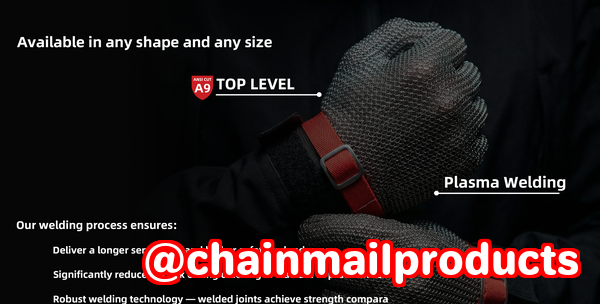
Welded Rings: These are more durable and secure. The rings are fused together using heat, making them nearly impossible to separate without extreme force. Welded rings ensure that your chainmail holds up under stress, providing the protection it promises.
-
Open Rings: These are less secure, and while they may look similar to welded rings, they’re more likely to come undone under pressure. This is a common issue with decorative chainmail or low-end products.
Quick Tip: Always check to see if the rings are welded by looking closely at the connection points. If the rings seem loose or easy to bend, you’re likely dealing with open rings.
3. Examine the Wire Thickness and Ring Diameter
The thickness of the wire and the inner diameter of the rings both affect the strength and durability of the chainmail. For maximum protection, you want thicker wire with a smaller inner diameter, as this leads to a tighter, stronger weave.
-
Wire Thickness: Thicker wire provides more durability, especially for industrial applications. For example, Aegimesh uses wire that is thick enough to ensure safety while still being flexible for wearability.
-
Ring Diameter: Smaller rings make for a denser weave and a more protective surface. This is especially important for protective or cut-resistant chainmail.
Quick Tip: Perform a simple pull test to gauge the strength of the rings. If they feel too easy to bend or stretch, they may not be up to the task.
4. Inspect the Weave Pattern: European 4-in-1 for Strength
When it comes to the weave pattern, the European 4-in-1 pattern is one of the most popular and reliable designs. This pattern weaves each ring through four others, creating a dense, strong structure.
-
European 4-in-1: Known for its strength, this weave is the standard for protective chainmail, providing a balanced level of flexibility and protection.
Quick Tip: Check to see how the rings are interwoven. If the pattern looks inconsistent or if the rings seem loosely connected, you might want to look elsewhere.
5. Look for Signs of Corrosion or Poor Craftsmanship
Even the best chainmail can suffer from wear and tear if it’s not made or maintained properly. When inspecting a product, check for signs of rust, corrosion, or poor craftsmanship, such as uneven welding or frayed wire.
-
Corrosion: Especially with lower-grade steel, you may notice rust or pitting on the rings.
-
Frayed Wire: Poorly made chainmail may have wires that are bent or frayed, which can compromise the overall strength of the piece.
Quick Tip: If you see any rust spots or rough edges, it’s best to look for a different product, as these imperfections are signs of poor-quality chainmail.
Why These Inspection Tips Matter
Taking the time to inspect chainmail before purchasing has several benefits:
-
Safety: If you’re buying chainmail for industrial use, food processing, or protection in high-risk environments, you can’t afford to take chances. Properly inspecting your chainmail ensures it will protect you when you need it most.
-
Durability: Whether you’re a collector, cosplayer, or buyer for industrial purposes, you want chainmail that will last. Following these inspection tips will help you avoid low-quality products that won’t stand the test of time.
-
Cost Efficiency: By identifying poorly-made chainmail early, you save money and frustration in the long run. You won’t have to replace cheap items that fall apart after a few uses.
Conclusion
When it comes to buying chainmail, quality matterswhether it’s for industrial use, cosplay, or historical reenactments. I highly recommend following these inspection steps to ensure any chainmail purchase meets safety and durability standards. Don’t settle for imitations or low-quality products; investing in the right piece will ensure safety and performance.
To learn more about identifying high-quality chainmail products, check out our detailed inspection guide at Aegimesh.
FAQs
-
How can I tell if a chainmail ring is welded or open?
Look closely at the ring’s connection. Welded rings will have a smooth, continuous joint, while open rings will have a visible gap or are less secure.
-
Which stainless steel grade is best for long-lasting chainmail?
316 stainless steel is more corrosion-resistant and durable, making it ideal for industrial, food processing, and outdoor uses.
-
How do I inspect the weave pattern for strength?
A strong, consistent weave like the European 4-in-1 ensures the chainmail can withstand stress. Check for tight, evenly placed rings.
-
What are the signs of low-quality or unsafe chainmail?
Rust, frayed wires, loose rings, and inconsistent weaving patterns are all signs of poor craftsmanship and potential safety issues.
-
Can decorative chainmail be used for protective purposes?
Decorative chainmail is often made with open rings and thinner wires, making it unsuitable for industrial or high-risk protective use.
-
How do I choose the right chainmail for industrial vs cosplay use?
For industrial use, opt for thick, welded rings made from 316 stainless steel. For cosplay, lighter, decorative chainmail may be sufficient, but check for quality craftsmanship to ensure durability.
-
Is there a quick way to test chainmail strength?
A simple pull test can reveal whether the rings are securely welded and if the weave holds up under pressure.
Tags or Keywords:
chainmail quality, welded rings, stainless steel chainmail, cut-resistant chainmail, chainmail inspection, European 4-in-1 weave, chainmail durability