
The Evolution of Industrial Chainmail
When I first started exploring chainmail for my workshop, I quickly realized it wasn’t as simple as picking up the cheapest option online. I remember receiving a set that looked perfect at first glanceshiny, tightly woven, and impressive in photos. But when I held it in my hands, a few rings opened under a light tug, and the weave felt loose in spots. That’s when I understood: not all chainmail is created equal. Whether you’re a buyer, industrial professional, or collector, distinguishing high-quality chainmail from low-quality or unsafe products is essential.
Why Chainmail Quality Matters
Many people assume chainmail is just a historical novelty or cosplay accessory. But in industrial settings, like food processing or cut-resistant work environments, the stakes are much higher. A single weak ring or improper weave can compromise safety, leading to injuries or damaged goods. Even for decorative or cosplay purposes, a fragile piece can unravel quickly, wasting money and effort.
For me, the turning point was discovering Aegimesh Chainmail, which not only sells products but also provides detailed guides to evaluate chainmail quality. This guide has helped me understand what to look for, from welded rings to stainless steel grades, and how to ensure each piece meets both safety and durability standards.
Common Challenges in Evaluating Chainmail
-
Distinguishing Welded Rings from Open Rings
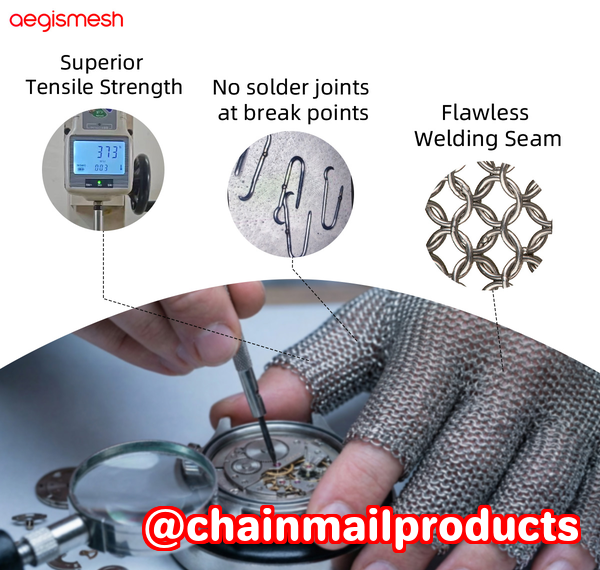
It’s easy to overlook, but the difference between a welded ring and an open ring is massive. Welded rings are fused at the seam, providing strength and integrity, while open rings can pull apart with minimal force. Many lower-quality products, especially decorative sets, use open rings because they’re cheaper to produce.
-
Understanding Stainless Steel Grades
Stainless steel isn’t just stainless steel. Grades like 304 and 316 have different levels of corrosion resistance. For industrial use or food handling, 316 stainless steel is often preferred because it can withstand moisture, salt, and cleaning chemicals better than 304. Using the wrong grade can mean rust spots or weakened rings over time.
-
Weak or Inconsistent Weaves
Chainmail durability depends on the weave pattern. The European 4-in-1 weave is a classic for strength, but poor craftsmanship can leave uneven spacing, skipped rings, or twisted connections. Inconsistent weaving reduces cut resistance and increases the likelihood of breakage under stress.
How to Inspect and Verify Chainmail Quality
I like to think of chainmail inspection as a detective task. Here’s my step-by-step approach:
-
Check the Material Type:
Look for clear labeling of stainless steel grade. If it’s 304, it may suffice for decorative or light-duty use. For industrial or food applications, 316 is the gold standard.
-
Inspect the Rings:
Examine each ring for a clean weld. A good weld should be smooth with no gaps or rough edges. Open or poorly welded rings are an immediate red flag.
-
Measure Wire Thickness and Ring Diameter:
Thicker wire generally indicates more durability. Similarly, check that ring diameters are consistent throughout the piece; uneven rings can create weak points.
-
Evaluate Weave Patterns:
For industrial or protective use, the European 4-in-1 weave is reliable. Hold a section in your hands and gently stretch itstrong, uniform weaves resist deformation.
-
Perform a Simple Pull Test:
Lightly tug on a few sections. Rings shouldn’t separate or elongate noticeably. This quick test can save you from buying chainmail that will fail under pressure.
-
Look for Signs of Corrosion or Poor Craftsmanship:
Any discoloration, rough edges, or gaps in rings should be treated as a warning sign. Even if the chainmail is labeled stainless steel, poor finishing can lead to rust over time.
Benefits of Proper Inspection
Taking the time to evaluate chainmail quality isn’t just about avoiding disappointmentit’s about safety and smart investment:
-
Industrial and Food Safety: Prevent accidents by ensuring your cut-resistant chainmail won’t fail.
-
Cosplay and Collectibles: Ensure your decorative pieces hold up under wear and time.
-
Saving Money: Avoid wasting funds on products that look great online but fall apart in practice.
Practical Tips for Different Uses
Industrial Cut Protection:
-
Prioritize 316 stainless steel, thick wires, and welded rings.
-
European 4-in-1 weave is ideal for flexibility and strength.
Food Processing:
-
Corrosion resistance is crucial. Inspect welds and wire finish carefully.
-
Chainmail gloves and aprons should fit snugly without gaps to prevent accidents.
Cosplay and Historical Replicas:
-
Visual authenticity matters, but inspect welds and weave for durability.
-
Even decorative chainmail can benefit from thicker wires for longevity.
Choosing the Right Chainmail for Your Needs
I’ve learned that one size does not fit all. Here’s a quick guide:
-
Industrial or Protective Use: Welded rings, 316 stainless steel, European 4-in-1, thicker wire.
-
Decorative or Cosplay: Can use 304 stainless steel, thinner wires, but check for consistent weaving.
-
Collectibles or Historical Replicas: Focus on accurate weave patterns and craftsmanship, but durability still matters.
By following these guidelines, you can confidently choose the right chainmail for your purpose, ensuring both safety and aesthetic satisfaction.
Conclusion
Over the years, inspecting chainmail has become second nature to me. From checking ring welds to assessing stainless steel grade and weave consistency, these steps help distinguish high-quality products from weak, unsafe alternatives. I highly recommend following these methods to ensure any chainmail purchase meets both safety and durability standards. For more detailed guidance, you can explore Aegimesh’s inspection resources: Learn more about identifying high-quality chainmail products. Check out our detailed chainmail inspection guide today.
FAQs
1. How can I tell if a chainmail ring is welded or open?
A welded ring has a smooth, fused seam with no gaps. Open rings have a visible split and can separate under pressure.
2. Which stainless steel grade is best for long-lasting chainmail?
316 stainless steel is preferred for industrial and food-use chainmail due to its high corrosion resistance. 304 is suitable for decorative purposes.
3. How do I inspect the weave pattern for strength?
Look for consistent spacing and uniform European 4-in-1 patterns. Stretch gentlystrong weaves resist deformation.
4. What are the signs of low-quality or unsafe chainmail?
Signs include open or poorly welded rings, uneven wire thickness, irregular ring diameters, rough edges, and early corrosion.
5. Can decorative chainmail be used for protective purposes?
Not reliably. Decorative chainmail may look authentic but often lacks welded rings or proper wire thickness for safety.
6. How do I choose the right chainmail for industrial vs cosplay use?
Industrial use requires welded rings, 316 stainless steel, and strong weaves. Cosplay allows lighter materials and thinner wires but check for consistent craftsmanship.
7. Is there a simple test to check chainmail durability?
Yes, a gentle pull test across a section can indicate weak rings or loose weaves. Proper chainmail resists noticeable stretching or separation.
Tags/Keywords:
chainmail quality, welded rings, stainless steel chainmail, cut-resistant chainmail, chainmail inspection, European 4-in-1 weave, steel metal chainmail durability, industrial chainmail, cosplay chainmail, chainmail safety