
Chainmail Arm Guards vs Cut-Resistant Sleeves: Which Provides Better Protection?
When it comes to personal safety in professions that require protection from cuts and abrasions, chainmail arm guards and cut-resistant sleeves are two popular options. But how do you know which one will provide the best protection and durability for your needs? Many buyers, collectors, and professionals face this dilemma when looking for the right kind of protective gear for industrial work, food processing, cosplay, or even historical re-enactments.
As someone who’s spent years working with chainmail products, I understand how confusing it can be to evaluate their quality and functionality. You want something that’s both effective and durable, but there are so many choices and variations in material, construction, and design. In this article, we’ll explore the differences between chainmail arm guards and cut-resistant sleeves, and how to evaluate the true quality of these products so you can make an informed decision.
The Challenge of Identifying High-Quality Chainmail
I’ve been there myselfstanding in front of a display of shiny new chainmail products, wondering if they’re the real deal or just overpriced imitations. When you’re buying chainmail for protection or display, it’s easy to fall for low-quality products that may not provide the level of safety or durability you need. Whether you’re a butcher looking for cut-resistant protection, a cosplayer crafting the perfect medieval look, or an industrial worker seeking reliable safety gear, the stakes are high when it comes to chainmail quality.
So, how can you avoid making the mistake of buying chainmail that won’t do the job? Let’s dive into what to look for when evaluating chainmail arm guards and cut-resistant sleeves, and how you can ensure that the product you choose is both safe and durable.
Chainmail Arm Guards: Built for Durability and Strength
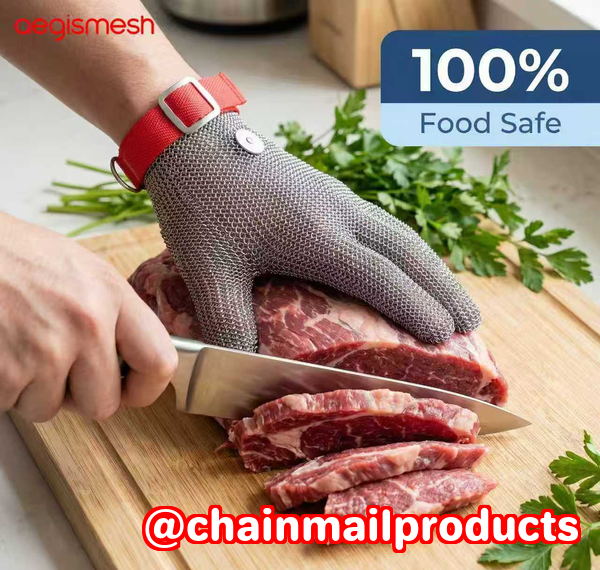
Chainmail arm guards are traditionally used for tasks requiring heavy-duty protection, such as butchery, industrial work, or food processing. These products are typically made from rings of stainless steel that are woven together to form a flexible yet tough mesh.
One of the most important things to look for in a quality chainmail arm guard is the material used in the rings. High-quality chainmail is typically made from stainless steeleither 304 or 316 grade. These grades of stainless steel are resistant to rust and corrosion, making them perfect for environments like food processing or outdoor industrial work. The main difference between the two grades is their resistance to corrosion. While both are durable, 316 stainless steel offers superior protection against chemicals and saltwater, which may be particularly useful for food processing environments.
Another thing to pay attention to is how the rings are connected. Chainmail rings can either be welded or open. Open rings are less durable and can come undone over time, especially with heavy wear. On the other hand, welded rings are much stronger and more secure. This is a key feature that distinguishes high-quality chainmail from lower-end products. Look for welded rings that are smooth and free from visible defects.
Cut-Resistant Sleeves: Convenience and Comfort
Cut-resistant sleeves, on the other hand, are designed for lighter protection but are often more comfortable and easier to wear for extended periods. These sleeves are commonly made from high-strength fibers like Kevlar or Spectra, which are woven tightly to create a barrier against cuts. While these sleeves provide a reasonable level of protection, they don’t offer the same level of durability or flexibility as chainmail.
Cut-resistant sleeves are often used in environments where quick and easy protection is needed, such as food processing or light industrial work. However, they tend to wear out faster than chainmail arm guards, especially if they are exposed to heavy abrasion or sharp objects.
How to Identify High-Quality Chainmail: Step-by-Step Inspection Guide
Now that we’ve established the differences between chainmail arm guards and cut-resistant sleeves, let’s get into the nitty-gritty of how to evaluate the quality of chainmail. Whether you’re buying for industrial use, cosplay, or collection purposes, it’s crucial to perform a proper inspection to ensure that the product you’re purchasing meets the necessary standards for durability and safety.
Here’s a step-by-step guide to inspecting chainmail products:
1. Check the Material Type: Stainless Steel Grades
The material is the first thing to look at. As mentioned earlier, chainmail is most commonly made from stainless steel, with 304 and 316 being the most popular grades.
-
304 stainless steel is the standard grade, offering good resistance to rust and corrosion.
-
316 stainless steel is the superior grade, offering even better corrosion resistance, especially in harsher environments like food processing.
For industrial use, you’ll want to make sure you’re getting at least 304 stainless steel, but 316 is ideal for environments where corrosion resistance is critical.
2. Inspect the Rings: Welded vs. Open Rings
The next thing to check is how the rings are connected.
-
Welded rings are the gold standard when it comes to durability. These are stronger, more secure, and won’t come undone under pressure.
-
Open rings, on the other hand, are more prone to failure, especially under heavy use.
To perform a quick test, try tugging on a small section of the chainmail. If the rings feel loose or separate easily, it’s a sign that you’re dealing with lower-quality chainmail.
3. Examine the Ring Thickness and Inner Diameter
The thickness of the wire and the diameter of the rings are crucial to the overall strength of the chainmail. Thicker wires and smaller inner diameters generally result in stronger, more durable chainmail. For instance, a wire thickness of 16 gauge and an inner diameter of 9/32″ is often considered optimal for most industrial applications.
If you’re looking for chainmail for cosplay or decorative purposes, the specifications can be a bit more lenient, but for industrial use, always opt for thicker wire and smaller ring diameters to ensure maximum protection.
4. Evaluate the Weave Pattern: European 4-in-1 Weave
The weave pattern is another important aspect of chainmail construction. European 4-in-1 is one of the most common and reliable weave patterns for strength and flexibility. In this pattern, each ring is passed through four others, providing a solid, interlocked structure that distributes pressure evenly.
To evaluate the weave, look for consistency in the ring placement. If the weave looks sloppy or irregular, it may be a sign of poor craftsmanship that can compromise the durability of the chainmail.
Why Proper Inspection Matters: Benefits of a Quality Check
Taking the time to inspect chainmail products before purchasing has several benefits:
-
Ensuring Safety: In industrial environments, the last thing you want is a piece of equipment that fails when you need it most. Low-quality chainmail can cause safety risks if the rings are not securely welded or if the weave is weak.
-
Maximizing Durability: By ensuring that the chainmail is made from high-quality materials and has a strong, consistent weave, you can ensure that your investment will last for years.
-
Saving Money: Identifying low-quality products early saves you from spending money on replacements or repairs. High-quality chainmail is a long-term investment that pays off.
Conclusion: How to Choose the Right Chainmail
In conclusion, whether you’re looking for chainmail arm guards for industrial protection or cut-resistant sleeves for light-duty tasks, it’s essential to carefully inspect the product’s material, rings, and weave to ensure it meets your needs.
I highly recommend following the steps outlined in this guide to make sure your chainmail purchases meet the highest standards for safety, durability, and performance. By inspecting the grade of stainless steel, the quality of the rings, and the weave pattern, you’ll be able to confidently choose a chainmail product that will provide the protection you need.
If you’re in the market for high-quality chainmail, be sure to check out our comprehensive inspection guide at Aegimesh. We’re here to help you make informed, confident choices about chainmail products that will stand the test of time.
FAQs
1. How can I tell if a chainmail ring is welded or open?
Check for a smooth, continuous connection in the ring. Welded rings should have no gaps and should feel secure when tugged. Open rings will show a small separation.
2. Which stainless steel grade is best for long-lasting chainmail?
For industrial and food processing use, 316 stainless steel offers superior resistance to corrosion. However, 304 stainless steel is a solid choice for general use.
3. How do I inspect the weave pattern for strength?
Look for a consistent pattern where each ring is securely connected to four others (European 4-in-1 weave). Any irregularities could indicate poor craftsmanship.
4. What are the signs of low-quality or unsafe chainmail?
Signs of poor-quality chainmail include loose rings, irregular weave patterns, weak welds, or visible rust spots.
5. Can decorative chainmail be used for protective purposes?
While decorative chainmail may look great for cosplay or display, it often lacks the durability and strength required for industrial protection. Always opt for higher-quality, welded-ring chainmail for safety purposes.
6. How do I choose the right chainmail for industrial vs cosplay use?
For industrial use, prioritize thicker wire, welded rings, and a tight, strong weave. For cosplay, you can focus more on appearance, though it’s still important to consider durability.
Learn more about identifying high-quality chainmail products at Aegimesh.