
Steel Chainmail vs Titanium Chainmail: Which is Better?
When you’re in the market for high-quality chainmailwhether for industrial use, cosplay, or displayit can be a real challenge to distinguish between different materials, like steel and titanium. Both offer unique benefits, but how do you know which one is right for your needs? It’s easy to get confused when browsing the countless options online, but understanding the key differences in strength, durability, and overall quality can help you make an informed decision.
The Problem: Evaluating Chainmail Quality
I’ve been there myselfstanding in front of a display of chainmail products, wondering how to ensure I’m buying something that actually meets my needs. Is this chainmail really going to offer the protection I need, or is it just a decorative piece? After all, in industries like food processing, where safety is paramount, the wrong choice could lead to serious consequences.
Whether you’re buying chainmail for protection in high-risk environments or searching for a showpiece for your costume, knowing what to look for is essential. But how can you tell if a piece of chainmail is truly high-quality or just a poorly crafted imitation? The answer lies in understanding the basic factors that determine chainmail’s durability, safety, and performance.
Common Pain Points in Evaluating Chainmail
Here are a few common issues many buyers face when evaluating chainmail products:
-
Welded vs. Open Rings: A chainmail’s construction method can make a huge difference in its effectiveness. Some manufacturers use open rings that can come apart easily, compromising the strength of the chainmail. Others use welded rings, which are more durable and offer better protection.
-
Material Confusion: Not all stainless steel is created equal. There’s a significant difference between 304 and 316 stainless steel when it comes to corrosion resistance and durability. If you’re looking for chainmail for industrial use, like cut-resistant gear, knowing which material is best for your needs is crucial.
-
Weak Weaves: If the weave pattern isn’t strong enough, it might not provide adequate protection. European 4-in-1 is a popular weave pattern, but even this design can fail if the rings are too thin or poorly welded.
These issues can leave you questioning whether your chainmail purchase will perform as expected. Fortunately, Aegimesh Chainmail has created a guide to help buyers avoid these pitfalls by offering step-by-step instructions for inspecting chainmail.
Aegimesh Chainmail: Your Guide to Quality Evaluation
At Aegimesh, we understand the importance of buying chainmail that is not only visually appealing but also safe and functional. Whether you’re using it for cosplay, food handling, or industrial protection, ensuring the durability and strength of the material is essential. Here’s how to properly inspect chainmail for quality:
1. Material Type: Stainless Steel vs. Titanium
The first step in evaluating chainmail is to understand the material used. Steel and titanium are two popular options, and while both are strong, they have distinct characteristics that make them better suited for specific uses.
-
Steel Chainmail: Stainless steel, especially 304 and 316 grades, is the most common material for chainmail. It’s durable, corrosion-resistant (especially the 316 grade), and cost-effective. Steel offers the right balance of strength and flexibility, making it ideal for both protection and decoration.
-
Titanium Chainmail: Titanium is lighter and more corrosion-resistant than steel, but it’s also much more expensive. Titanium chainmail can be a great choice for lightweight protection, but it’s not as strong as steel, which can be a disadvantage in high-stress environments.
If you’re looking for something for heavy-duty use, such as cut protection or food processing, steel chainmail (especially 316 stainless steel) is often the better choice.
2. Inspecting the Rings: Welded vs. Open
When inspecting chainmail, one of the most important factors is how the rings are made. There are two main types of rings used in chainmail:
-
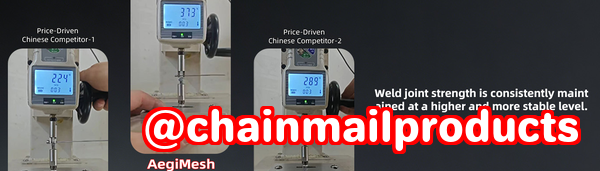
Welded Rings: These rings are welded closed, which makes the weave more secure and prevents them from coming apart. Welded rings are the preferred choice for safety and durability, especially in industrial applications where the integrity of the weave is critical.
-
Open Rings: Open rings are simply twisted closed, which means they can come undone over time. While open rings are less expensive to manufacture, they are more prone to wear and tear, making them unsuitable for high-risk or high-durability applications.
A quick way to tell the difference is by looking closely at the rings. Welded rings will have a visible weld mark, while open rings will just look like loops.
3. Wire Thickness and Ring Diameter
The thickness of the wire and the inner diameter of the rings both play a role in the overall strength and durability of the chainmail.
-
Wire Thickness: Thicker wire means stronger rings, which leads to a more durable chainmail piece. However, keep in mind that the wire should not be so thick that it affects the flexibility or comfort of the chainmail. For industrial use, especially in food processing, a thicker wire is usually better to ensure cut resistance.
-
Ring Diameter: The inner diameter of the rings affects how tightly the rings fit together. If the rings are too large, the weave may be too loose and not provide the necessary protection. A tighter weave, like the European 4-in-1 pattern, is ideal for strength.
4. Weave Pattern: European 4-in-1
The weave pattern is another key factor to consider. The European 4-in-1 weave is one of the most popular because it offers a good balance of flexibility and strength. Each ring is connected to four other rings, forming a sturdy, interlocking pattern. This type of weave is commonly used in both historical replicas and modern protective gear.
When inspecting the weave, make sure that the rings are evenly spaced and securely connected. A poorly executed weave can lead to weak spots where the chainmail may break or become compromised.
5. Testing Durability: The Pull Test
A simple pull test can help you gauge the durability of the chainmail. Gently tug on a small section of the weave to see if the rings hold together or if they separate easily. A high-quality piece of chainmail will resist pulling apart, even under moderate force.
6. Signs of Corrosion or Poor Craftsmanship
Always inspect the surface of the chainmail for signs of rust, discoloration, or poor craftsmanship. Corrosion is particularly concerning for stainless steel chainmail, especially if it’s going to be used in food handling or other environments where hygiene is important.
Why Proper Chainmail Inspection Matters
By properly inspecting chainmail before purchase, you can ensure that it meets safety and durability standards. Here’s why it’s important to pay attention to these details:
-
Avoid Unsafe Chainmail for Industrial Use: If you’re using chainmail for protection in industrial environments, a low-quality product could fail and cause injury. A well-inspected, high-quality chainmail product will protect you from cuts, abrasions, and other hazards.
-
Ensure Durability for Cosplay or Historical Replicas: Even if you’re buying chainmail for a costume or a historical piece, you want something that will last. Quality chainmail will retain its shape and appearance over time, while low-quality options will break down or look worn out quickly.
-
Save Money by Identifying Low-Quality Products: By knowing what to look for, you can avoid purchasing low-quality products that may cost you more in repairs or replacements down the line.
Conclusion: My Recommendation for Quality Chainmail
After years of working with different chainmail products, I highly recommend following these inspection steps to ensure you get the best value and performance from your purchase. Whether you’re looking for chainmail for industrial, cosplay, or decorative purposes, knowing how to inspect it for quality is the key to avoiding poor decisions and wasted money.
If you want to dive deeper into the world of high-quality chainmail, I encourage you to explore our detailed guide at Aegimesh. You’ll learn everything you need to know about inspecting chainmail, from materials to weaves to durability tests.
Learn more about identifying high-quality chainmail products: Aegimesh Chainmail
FAQs
-
How can I tell if a chainmail ring is welded or open?
Look closely at the rings. Welded rings will have a visible weld mark, while open rings will be just loops that can come undone.
-
Which stainless steel grade is best for long-lasting chainmail?
316 stainless steel is more corrosion-resistant and durable than 304, making it ideal for high-performance applications, especially in industrial settings.
-
How do I inspect the weave pattern for strength?
Check for an even, tight weave. European 4-in-1 is a common, strong weave pattern that offers good protection and flexibility.
-
What are the signs of low-quality or unsafe chainmail?
Look for visible corrosion, rust, uneven rings, or a weak, loose weave. These are all signs of poor craftsmanship that could lead to safety issues.
-
Can decorative chainmail be used for protective purposes?
Decorative chainmail is usually not as strong as functional chainmail and may not offer the same level of protection. Always check the quality before using it in high-risk environments.
-
How do I choose the right chainmail for industrial vs. cosplay use?
For industrial use, look for thicker wire, welded rings, and a strong weave pattern like European 4-in-1. For cosplay, lighter and more flexible chain