
Chainmail Accessories for Wet and Cold Conditions
When it comes to purchasing chainmail, the task can be tricky. Whether you’re a collector, cosplayer, or industrial user, finding high-quality chainmail that is durable, safe, and made to last is often harder than it seems. I’ve been in your shoes beforestanding in front of a vendor or scrolling online, unsure if I was getting my money’s worth. Chainmail accessories, whether for protection in food processing or as part of a historical reenactment, are an investment. They need to be made with the right materials, crafted with precision, and thoroughly inspected to ensure they can withstand real-world conditions. After all, not all chainmail is created equal.
The good news? With a bit of know-how, you can identify quality chainmail from low-quality or decorative pieces. In this article, I’ll walk you through the key steps to inspecting chainmail for quality. We’ll cover everything from material types and welds to evaluating the weave patterns. By the end of this guide, you’ll know exactly how to pick out chainmail that will serve its intended purpose without breaking the bank or compromising on safety.
Common Pain Points When Evaluating Chainmail Quality
Before diving into how to inspect chainmail, let’s talk about some of the common frustrations you might encounter when evaluating its quality.
Difficulty Distinguishing Welded Rings from Open Rings
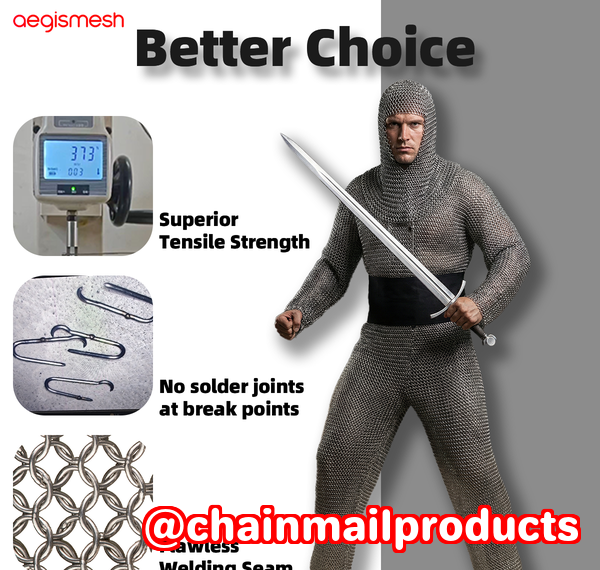
If you’re new to chainmail, this is a big one. Open rings, where the ring is not welded shut, are more likely to weaken over time as they pull apart, especially under stress. Welded rings, on the other hand, are closed and provide far greater durability. However, many lower-quality products use open rings but charge a premium price. Knowing how to identify the difference is essential.
Confusion About Stainless Steel Grades
Not all stainless steel is created equal. You may see terms like 304 stainless steel and 316 stainless steel, and while they may sound similar, they have important differences. 304 is generally fine for decorative use but isn’t as resistant to corrosion or wear as 316, which is preferred for industrial applications or food processing.
Weave Patterns That Don’t Hold Up
The type of weave can also affect how durable your chainmail is. For example, the European 4-in-1 weave is one of the most reliable patterns, providing flexibility and strength. However, some lower-quality chainmail may use weaves that are too loose or inconsistent, weakening the overall structure.
Aegimesh Chainmail: Your Guide to High-Quality Chainmail
At Aegimesh, we believe in providing the tools and knowledge necessary to make an informed decision when purchasing chainmail. Our products are crafted with premium materials, designed to endure harsh conditions, and tested for strength and durability.
Whether you’re using chainmail for industrial purposes or as a decorative accessory, it’s important to understand what goes into creating a quality product. Here are a few essential things to check when inspecting chainmail:
How to Inspect Chainmail for Quality
1. Check the Material Type: 304 vs 316 Stainless Steel
The material used in your chainmail can determine how long it will last. For general use, 304 stainless steel is fine, but for environments where corrosion resistance is a top prioritysuch as food processing or medical applicationsyou’ll want to look for 316 stainless steel. Here’s why:
-
304 Stainless Steel: Commonly used for decorative purposes or for situations where corrosion isn’t a huge concern.
-
316 Stainless Steel: More corrosion-resistant, making it ideal for harsh conditions like wet environments, industrial use, and food handling.
To check, look for product descriptions or ask the manufacturer directly about the stainless steel grade.
2. Inspect the Welds: Welded vs. Open Rings
It’s not just about how the rings are arranged in a patternit’s about how they are constructed. Welded rings are far superior to open rings. With welded rings, you won’t have to worry about rings pulling apart or loosening over time. Here’s how to check:
-
The Ring Test: Lightly tug on individual rings. Welded rings will stay intact and tight, while open rings will shift or even open slightly under pressure.
-
Visual Inspection: Look closely at the rings. If you see a tiny seam or discoloration along the edges of a ring, it’s likely welded. Open rings may appear completely round with no signs of welding.
3. Evaluate the Weave Pattern for Strength
The type of weave pattern used can significantly impact your chainmail’s durability. The most common weave pattern is the European 4-in-1, where four rings pass through one central ring, creating a tight, balanced structure.
-
European 4-in-1 Weave: This pattern is ideal for both durability and flexibility. It offers strong protection and is commonly used in industrial, protective, and cosplay applications.
-
Loose Weaves: If you see a chainmail weave that looks loose or inconsistent, that’s a red flag. It likely means the piece won’t hold up under pressure.
4. Check Ring Thickness and Inner Diameter
Ring thickness plays a big role in durability. Thicker rings provide greater strength and longevity, especially in industrial or protective applications.
-
Wire Thickness: Look for a product with thicker wire, as it will resist wear better and maintain its shape longer.
-
Inner Diameter: The diameter of the rings affects how tightly the weave fits together. Smaller diameters usually mean a tighter, stronger weave, which is better for protective use.
Practical Tips to Ensure Durability
Now that you know what to look for in terms of material, welding, and weave, here are some practical tips for ensuring your chainmail purchase is a solid investment:
-
Pull Test: This simple test will help you gauge the strength of the chainmail. Hold a section of the chainmail and give it a firm pull. If the rings stay intact and don’t show any signs of opening, you’re dealing with quality chainmail.
-
Signs of Corrosion: While stainless steel is generally corrosion-resistant, it can still show signs of wear over time. Check for any rust spots or discoloration, particularly around the rings.
-
Don’t Overlook the Fit: Chainmail that is too loose or doesn’t sit well will lose its protective qualities. When buying, ensure that the chainmail fits properly for the intended use.
Conclusion: Choosing the Right Chainmail
When you take the time to inspect your chainmail carefully, you can rest assured that it will serve you well. Whether you’re using it for industrial cut protection, food processing, cosplay, or as part of a historical costume, these inspection methods can help you avoid low-quality products and ensure durability.
I highly recommend following these steps to ensure any chainmail purchase meets safety and durability standards. By checking the material, inspecting the welds, and evaluating the weave, you’ll be well on your way to finding high-quality chainmail that will perform well in all conditions.
Learn more about identifying high-quality chainmail products: Aegimesh Chainmail
Check out our detailed chainmail inspection guide today!
FAQs
1. How can I tell if a chainmail ring is welded or open?
Look closely at the edges of the ring. Welded rings will have a faint seam where the two ends are joined, while open rings will show no such connection and will shift under pressure.
2. Which stainless steel grade is best for long-lasting chainmail?
316 stainless steel is ideal for environments where durability and corrosion resistance are critical. 304 stainless steel works well for decorative uses.
3. How do I inspect the weave pattern for strength?
Look for tight, consistent weaves, like the European 4-in-1 pattern. Avoid loose weaves, as they tend to weaken the structure of the chainmail.
4. What are the signs of low-quality or unsafe chainmail?
Signs include inconsistent or loose weaves, weak welding (or open rings), and thin wire or improper material like low-grade stainless steel.
5. Can decorative chainmail be used for protective purposes?
While decorative chainmail can look great for cosplay or display, it may not offer the same durability and strength as chainmail designed for industrial or protective use.
6. How do I choose the right chainmail for industrial vs cosplay use?
For industrial or safety use, look for high-quality 316 stainless steel, welded rings, and a strong, tight weave. For cosplay, you can opt for decorative pieces, but still check for durable material and weave patterns.
7. How do I maintain my chainmail?
Regularly clean your chainmail to prevent buildup of dirt and grime. If you use it in wet or corrosive environments, check periodically for signs of rust or wear.