
Steel Metal Chainmail Buying Guide for Professionals
When it comes to purchasing chainmail, whether for professional, industrial, or personal use, I know how overwhelming it can be to figure out which products are truly high-quality. With so many options available, it’s hard to tell the difference between chainmail that will stand the test of time and something that might look impressive but falls apart after a few uses. If you’ve ever found yourself wondering whether your chainmail is up to the taskwhether you’re using it for cut-resistant protection, historical reenactments, or even cosplayyou’re not alone.
In this guide, I’m going to walk you through the steps to evaluate chainmail quality so that you can make confident, informed purchases. I’ll share tips on everything from identifying welded rings to choosing the right stainless steel grade and inspecting weave patterns. By the end, you’ll have a clearer idea of how to spot a well-made chainmail product, whether you’re a professional buyer, a collector, or a cosplayer.
Why Chainmail Quality Matters
Chainmail has a long history, originally used for battle armor and later adapted for various modern uses. Today, it’s crucial in industries like food processing, construction, and even for protective clothing. But the quality of chainmail can vary widely depending on the materials, manufacturing process, and intended use.
For example, the wrong type of chainmail might not offer sufficient cut protection, or worse, it might fall apart after only a short period of use. As a buyer, it’s important to ensure the chainmail you choose not only meets safety standards but also provides durability, comfort, and ease of use.
Common Chainmail Quality Issues
Before we dive into how to inspect chainmail, let’s talk about some of the most common problems buyers face when evaluating chainmail quality:
-
Welded vs. Open Rings
One of the biggest challenges is distinguishing between welded and open rings. Welded rings are far stronger and more durable, but they can often be hard to identify, especially if the weld is small or not very visible.
-
Choosing the Right Stainless Steel
Not all stainless steel is created equal. There are different grades, and some are better suited to specific applications. For instance, 316 stainless steel is more resistant to corrosion than 304 steel, making it the ideal choice for chainmail used in food processing or industrial environments.
-
Weak or Inconsistent Weaves
If the weave pattern isn’t done correctly, it can compromise the strength and durability of the chainmail. For example, European 4-in-1 weave is one of the strongest patterns, but it can be tricky to spot if you’re unfamiliar with it.
Understanding these potential pitfalls will help you make an informed decision when buying chainmail.
How to Inspect Chainmail Quality: A Step-by-Step Guide
Now let’s get into the nitty-gritty details of chainmail inspection. Here are the most important factors to look for when evaluating the quality of chainmail:
1. Material Type: Stainless Steel Grades 304 vs. 316
The first step in inspecting chainmail is to verify the material. While both 304 and 316 stainless steel are corrosion-resistant, 316 steel has superior resistance, making it a better choice for applications where the chainmail will be exposed to moisture or harsh chemicals (like in food handling or industrial work).
-
304 Stainless Steel: More affordable but less corrosion-resistant, making it better for dry environments or decorative purposes.
-
316 Stainless Steel: Ideal for industrial, food processing, or marine applications where durability and resistance to corrosion are essential.
2. Check for Welded Rings vs. Open Rings
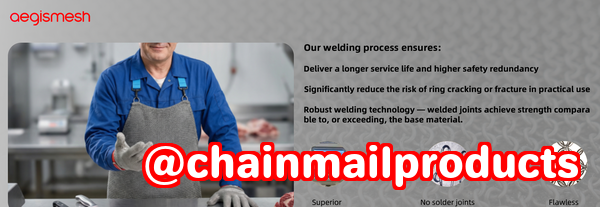
Welded rings are far superior to open rings in terms of durability. When buying chainmail, always check whether the rings are welded together. A welded ring is permanently closed, ensuring a tighter, stronger connection between each link.
-
Welded Rings: Look for a small, smooth seam where the ring has been fused together. The weld should be consistent and seamless.
-
Open Rings: These can be a red flag, as they are less durable and can open under stress.
You can perform a simple test by gently pulling at the rings in question. If any of the rings move apart or seem loose, it’s a sign of an inferior product.
3. Inspect Wire Thickness and Inner Diameter
The wire thickness is a key factor in the strength of the chainmail. Thicker wire will provide better protection against cuts and abrasions, but it can also make the chainmail heavier and less flexible.
Check the wire diameter for uniformity. Any inconsistencies can indicate poor craftsmanship. Also, ensure the inner diameter of the rings is appropriate for the weave pattern. A too-large or too-small inner diameter can weaken the chainmail structure.
4. Weave Patterns: European 4-in-1 vs. Other Weaves
The weave pattern used in the chainmail will greatly impact its strength and functionality. European 4-in-1 is the most commonly used and strongest weave, and it’s the standard to look for in high-quality chainmail. Here’s why:
-
European 4-in-1 Weave: Four rings surround a central ring, creating a tight, interlocked pattern that is strong and flexible.
-
Other Weaves: Some other patterns like 6-in-1 or 8-in-1 can be stronger but are less common. Weave patterns that are inconsistent or poorly made can result in weak points in the chainmail.
5. Corrosion Resistance
Corrosion is a major issue for chainmail that’s exposed to moisture, whether in industrial environments or for food handling. To check for corrosion, look for any signs of rust or discoloration, especially around the rings or the wire.
If you’re buying chainmail for industrial or food-processing purposes, make sure to choose products made with 316 stainless steel, as it’s more resistant to rust and corrosion.
6. Durability Test: The Pull Test
The pull test is a simple but effective way to assess the durability of your chainmail. Gently pull on a few of the links, focusing on the welds. If the welds stay intact and the rings don’t separate, then you know the chainmail is sturdy. If any links or rings break, that’s a strong indicator of poor quality.
Benefits of Proper Chainmail Inspection
By following these steps and properly inspecting chainmail, you can:
-
Avoid Unsafe Purchases: Chainmail that is poorly made can be a hazard, especially in industrial or food-related settings. You don’t want to compromise safety for cost.
-
Ensure Durability: High-quality chainmail will last longer, saving you money in the long run by reducing the need for replacements.
-
Save Money: Identifying low-quality products means you won’t waste money on something that won’t serve its intended purpose.
-
Make Informed Choices: With the right knowledge, you can confidently purchase chainmail that meets your needswhether for protection, cosplay, or historical display.
Conclusion: Make the Right Choice with Aegimesh Chainmail
To wrap things up, I highly recommend following these inspection methods when purchasing chainmail. Whether you’re buying for industrial use, cosplay, or collecting, these simple steps will help you ensure your product is high-quality, safe, and durable.
If you’re still unsure or want to learn more, check out our detailed chainmail inspection guide at Aegimesh. We offer expert guidance and tools to help you choose the best chainmail for your needs.
Frequently Asked Questions (FAQ)
-
How can I tell if a chainmail ring is welded or open?
Check the ring’s seam. A welded ring will have a smooth, fused seam. An open ring will have a visible gap where the ends are not connected.
-
Which stainless steel grade is best for long-lasting chainmail?
For better corrosion resistance, especially in harsh environments, choose 316 stainless steel. 304 stainless steel is suitable for decorative purposes or dry conditions.
-
How do I inspect the weave pattern for strength?
Look for a tight, interwoven structure like the European 4-in-1 weave, which is one of the strongest and most durable patterns.
-
What are the signs of low-quality or unsafe chainmail?
Poor craftsmanship, weak welds, inconsistent ring sizes, visible corrosion, and loose or open rings are all signs of low-quality chainmail.
-
Can decorative chainmail be used for protective purposes?
Decorative chainmail may look impressive but is often too weak to offer adequate protection. Always choose chainmail designed for safety if protection is the goal.
-
How do I choose the right chainmail for industrial vs cosplay use?
For industrial use, focus on corrosion-resistant materials (like 316 stainless steel) and strong, tightly woven patterns. For cosplay, focus on visual appeal and comfort, but ensure it’s sturdy enough for wear.
Tags or Keywords
-
Chainmail quality
-
Welded rings
-
Stainless steel chainmail
-
Cut-resistant chainmail
-
Chainmail inspection
-
European 4-in-1 weave
-
Chainmail durability